Deciding you want a life coach is the hard part, and it often takes years. Finding one sounds like it should be the easy part, and then the search begins: a thousand profiles, a dozen directories, websites that all promise clarity and breakthroughs in the same soft photography. It is surprisingly easy to spend a month comparing coaches and never book a call.
That outcome is worth taking seriously, because for someone with a stalled goal it is the same pattern in a new place. The search feels like progress. It is not, until it ends with a person and a first session in the calendar.
So this page treats finding a coach as a short, bounded process with an end date, rather than an open-ended hunt for the perfect match.
This page covers what to settle before you look, the four places coaches can actually be found, how to get to a shortlist of three, what to ask on a first call, and how to decide.
Name the goal before you start looking
The goal decides which kind of coach to look for, and it gives every first call something specific to test.
"I want a life coach" is a reasonable starting point and a poor search term. Before opening a single directory, write two sentences: the goal you most want to move, and what has been getting in the way of it. Something like "start the design studio I have talked about for six years; I know roughly what to do and keep not doing it."
Those two sentences do three jobs:
- They point to a type of coach. A career change into an unfamiliar field may call for a specialist; a goal that is mostly short of follow-through often suits a generalist. Types of life coaching sets out the main specialties and where each one stops.
- They point to a format. If you want someone to think with, a person in a one-to-one format is worth paying for. If you mainly need regular contact, other formats may fit, and online life coaching compares video sessions, platforms, messaging, groups and AI.
- They give you a test. On a first call you can read the two sentences out and listen to what the coach does with them.
If the goal is hard to name at all, what to talk about with a life coach has prompts that help.
The four places coaches can actually be found
Referrals, directories, platforms and professional bodies each surface a different kind of coach. Use one or two, not all four.
Each route has a different trade-off between trust, choice and effort:
- Referrals. Ask two or three people you respect whether they have worked with a coach and would recommend them. A referral comes with a real account of what the coaching was like, which no profile can give you. The limit is range: you get the coaches your friends happened to use, who may not fit your goal.
- Directories. Searchable listings of coaches, usually filterable by specialty, location and format. They give you the widest choice and the least filtering, since most directories list anyone who signs up. Treat a directory as a place to find names, then judge each coach yourself.
- Coaching platforms. Services that vet coaches, match you with one and handle scheduling and payment. They narrow the field and add some quality control, at the cost of choosing from their roster rather than the whole market.
- Professional bodies. Coaching associations publish searchable lists of members who hold their credentials. A credential is not required to practice and does not guarantee fit, but it does tell you the coach has trained in a method and agreed to a code of conduct.
Pick the route that matches what you are short of. If trust matters most, start with referrals. If your goal is unusual, a directory's range helps. If you would rather someone else did the first round of vetting, a platform does that.
Worth knowing: cost varies a great deal across these routes and between coaches. What a life coach costs sets out the market for human coaching, so you can judge a quote when it arrives.
Get to a shortlist of three
Three coaches are enough to compare. More than that, and the search becomes the thing you do instead of the goal.
From whichever route you chose, collect a longer list of names, then cut it to three with a quick read of each coach's own site or profile. You are looking for a few plain signals:
- They describe a method. A good coach can say how a session works and which approach they draw on, such as the GROW questions. A page that is all feelings and no process is a weaker sign.
- They say who they work with. Coaches who name the kinds of goals and people they usually help are easier to judge than coaches who help everyone with everything.
- They offer a first call or a short start. A free introductory call or a single paid session is common, and it lets you test fit before committing.
- They promise nothing specific about outcomes. Coaching can offer structure, questions and follow-up. It cannot promise a job, a figure or a transformed life, and an offer that does is selling the promise.
Anything that pushes the other way, such as pressure to buy a long package before you have spoken, belongs on the warning list in is life coaching a scam. One of those signs is enough to drop a name from the shortlist.
Treat the first call as a test
A first call is your chance to see the coach work, not to hear a sales pitch. Ask the same questions of all three and compare the answers.
Most coaches offer a short introductory conversation. Use it deliberately. Read out your two sentences about the goal, then ask:
- How does a session work? You want a clear structure, not "it depends on you."
- What happens between sessions? This is the most revealing question, because a goal mostly stalls in the gaps. Listen for a written plan, a check-in or some contact, rather than silence until the next call.
- What would the first four weeks focus on, for this goal? A good coach can sketch it roughly; a vague answer here usually means a vague engagement.
- How do I stop? Ask about cancellation and refunds before paying for anything, especially for packages paid in advance.
- What do you not do? A good coach names their limits plainly, including the point at which another professional would be the right person, and this is where that line sits.
Pay as much attention to how the call feels as to the answers. A coach who asks more than they talk, who repeats your goal back accurately and who is comfortable saying what they do not know is showing you the work. What a life coach actually does describes a full session, which is a useful benchmark for this one.
Decide within two weeks
Give the search an end date. A coach chosen on a deadline beats the perfect coach still being researched in March.
The temptation after three calls is to look for a fourth, just in case. Resist it. Choose whichever of the three you would most want to tell the truth to when a week goes badly, because that is the conversation coaching eventually comes down to.
Then book the first session and agree a short trial: four to six weeks with a specific, observable goal, such as "three conversations with people running small studios, booked and held." At the end of it, judge the coaching by what happened rather than how the sessions felt.
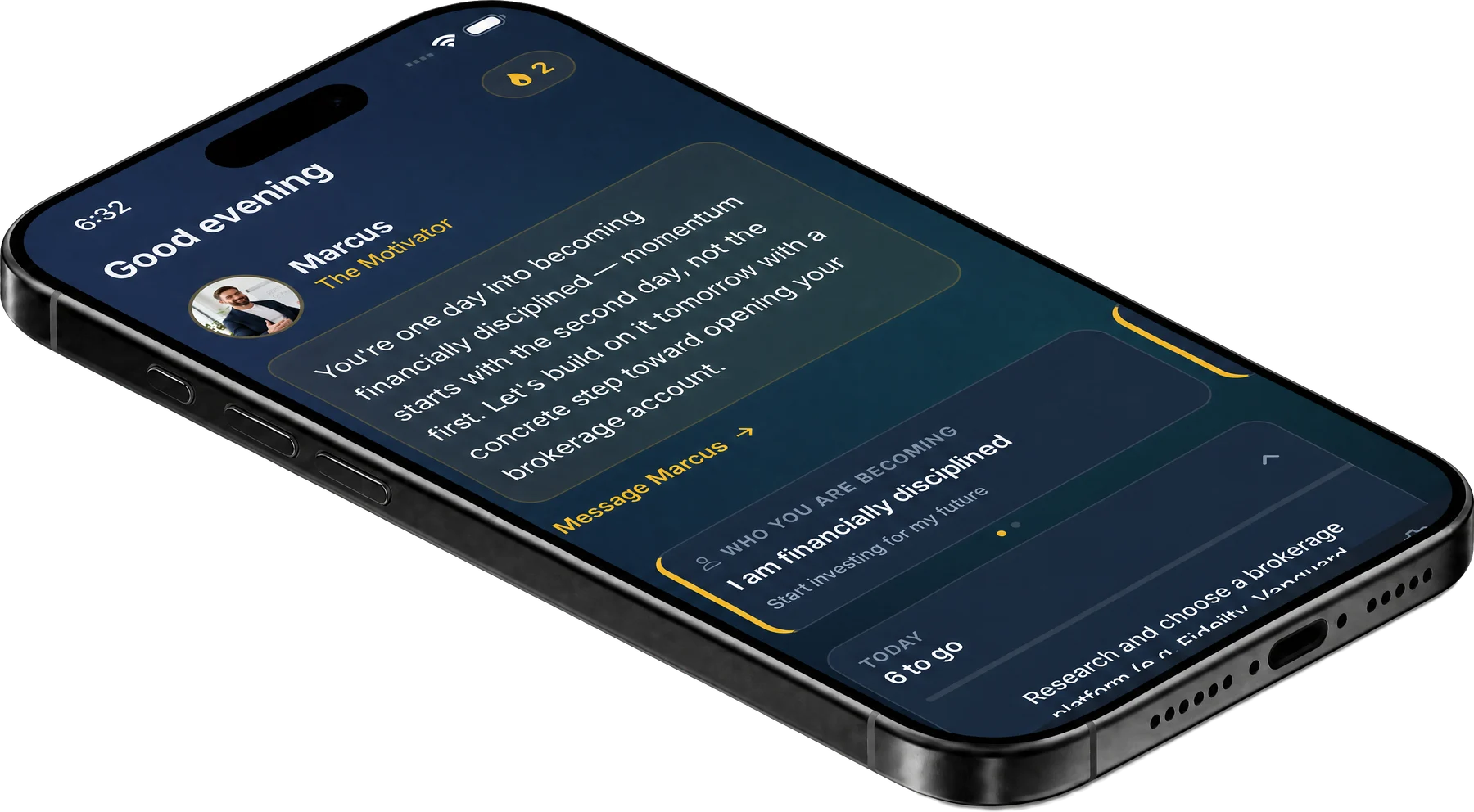
There is also a route that is not a person. Disclosure: we build an AI coaching app, so weigh this accordingly. In Odyssey you choose between five coaches who work differently, the coach helps break your goal into milestones, and check-ins arrive on a rhythm you set. It costs far less than a human coach and lacks a person's judgment and experience; is an AI life coach worth it sets out that trade honestly, and how to choose an AI life coach has its own checklist.
How to find a life coach, in five lines
- Write the goal and what is in the way in two sentences before you search
- Look through one or two routes: referrals, directories, platforms or professional bodies
- Cut the list to three using method, focus, a first call and no promised outcomes
- Ask all three the same five questions and compare the answers
- Decide within two weeks and start with a short, bounded trial
Common questions
How do I find a good life coach?
Start by writing down the specific goal you want help with. Then look through referrals, a coaching directory, a coaching platform or a professional body's member list, narrow the results to three coaches who describe a clear method, and book a short introductory call with each. Choose based on how they handle your actual goal on that call.
Where can I find a life coach?
The main routes are personal referrals, online coaching directories, coaching platforms that match you with a coach, and the member lists of coaching associations. Referrals give the most trustworthy picture, directories give the widest choice, and platforms do some of the vetting for you.
What should I ask a life coach before hiring them?
Ask how a session works, what happens between sessions, what the first four weeks would focus on for your goal, how cancellation works and what they do not do. Clear, specific answers to all five are a good sign. Vague answers, or promises about specific results, are a reason to keep looking.
Should a life coach be certified?
Certification is not required to practice, and it does not guarantee a coach will suit you. It does show that the coach has trained in a method and agreed to a code of conduct, which is a useful signal alongside a referral or a good first call.
How long should it take to find a life coach?
Two weeks is a reasonable limit. That is enough time to collect names, narrow them to three and hold three introductory calls. Searching for longer rarely finds a better coach and often becomes a way of putting off the goal itself.
The takeaway
Finding a life coach is a short process: name the goal, look in one or two places, cut to three, test each with the same questions and decide within two weeks. The aim is not the perfect coach. It is a good one, booked, with a first session in the calendar and a trial period long enough to judge by results.
One thing to do today. Write the two sentences: the goal you most want to move and what keeps getting in the way. Then send one message to someone you respect asking whether they have worked with a coach they would recommend, and put a date two weeks from today in your calendar labeled "choose a coach."