People type this comparison into a search box at a specific moment: something in life is not moving, and it is not obvious whether the answer is a professional who treats or a professional who pushes.
The two jobs get blurred constantly, mostly by marketing, and the blur is not harmless. So here is the difference stated plainly, the signs that point each way, and where AI coaching products, including ours, sit in it.
The difference is licensure, and everything follows from it
A therapist is a licensed clinician. A life coach is not, because no such license exists.
A therapist, whether a psychologist, a licensed counselor, or a clinical social worker, has a graduate degree, supervised clinical hours, a state license, a regulatory board that can take that license away, and a legal duty of care. They can assess what is going on, diagnose it, and treat it.
A life coach has none of that apparatus, and not because coaches cut corners. The title is unregulated almost everywhere: anyone may use it tomorrow. Voluntary accreditation exists, through bodies like the ICF, and it is worth asking about precisely because nothing requires it.
Everything else people list as the difference, tone, price, homework, how often you meet, is downstream of this one. One of these professions is accountable to a licensing board for your wellbeing. The other is accountable to you for your progress.
What each one is actually for
Therapy treats. Coaching trains. Those are different jobs, not different price points for the same job.
Therapy exists for when something is wrong and interfering: persistent low mood, overwhelming worry, trauma, grief that will not settle, patterns that keep damaging the same relationships. The work often involves understanding where a pattern came from, and the goal is relief and recovery.
Coaching starts from the opposite assumption: that you are basically functioning and want to get somewhere specific. A stalled career move, a business that has not started, a goal carried for six years. The work is forward-looking, structured around a framework like GROW, and the goal is progress you can point at.
A good therapist can do some of the second job. A coach cannot do the first one, is not permitted to try, and a coach who blurs that line is telling you something about their judgment.
The deciding question is functioning
Not "how bad is it". Whether it is getting in the way.
Signs that point at a licensed professional first:
- It is interfering with work, sleep, eating, or relationships.
- It has a history: the same weight has been sitting on you for months, not weeks.
- The people close to you have said something.
- You are using things, substances, spending, avoidance, to get through ordinary days.
- Any thought of harming yourself. That one is immediate, and it is a doctor or emergency services, not a coach and not an app.
Signs that point at coaching:
- Life is genuinely fine, and a specific goal has not moved in years.
- You know what to do and are not doing it.
- You want structure, a plan, and someone to ask about it, not relief from something.
- The frustration is about a gap between where you are and where you want to be, not about getting through the day.
If you read both lists and are not sure, start with the licensed professional. A good clinician can tell you in one session whether what you brought them is clinical territory, and "this is not clinical territory, go chase the goal" is a genuinely useful thing to hear from someone qualified to say it.
Worth knowing: the coaching industry's own research says the most common reason people hire a coach is feeling stuck, which is not an illness and does not need treating. What a coach actually does with that is structure and follow-through, not care.
What they cost, and why comparing prices is a category error
A therapy session and a coaching session can cost similar money and buy completely different things.
Therapy is a healthcare expense: in many places insurance covers some of it, and what you are paying for is regulated clinical treatment. Coaching is out of pocket, unregulated, and priced like a professional service.
Which is why "coaching is cheaper than therapy" is the wrong sentence even when the arithmetic happens to be true. They are not substitutes. Buying coaching because care is expensive gets you an accountability structure for a problem that needed treatment, and it usually costs more in the end, in time.
Can you do both? Frequently the right answer
They combine well because they are pointed at different things.
A common and sensible arrangement: a therapist for the clinical work, and coaching for the goal-shaped part of life, the career move, the training plan, the business. The two do not compete for the same hour.
Two rules make it work:
- Tell the therapist. They should know what else is running, and they will have a view on whether goal-pressure helps or hinders right now.
- Keep the lanes. The coach gets the goal. The clinician gets everything about why the weeks feel the way they do.
Where AI coaching sits in this
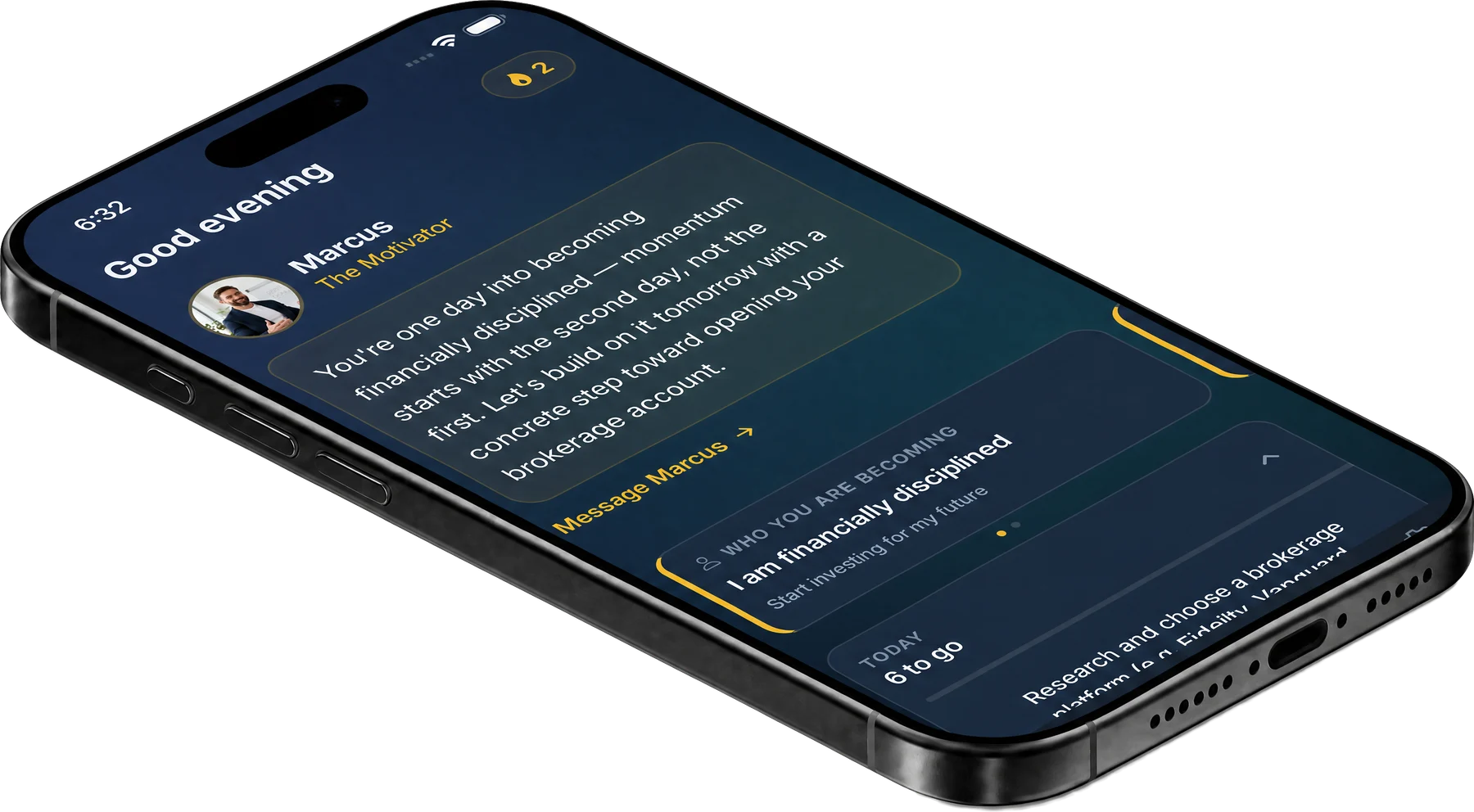
Entirely, unambiguously, on the coaching side. We build one, so read this as the vendor speaking against its own expansion.
An AI coach can run a goal session, hold a plan, and follow up on commitments. It cannot assess you, cannot diagnose anything, cannot treat anything, and, unlike a human coach, cannot even notice reliably that a conversation has drifted into territory that needs a professional and refer you out. That last gap matters: a good human coach has judgment about the edge of their remit. Software has a guideline.
So two hard rules for evaluating anything in this category:
- Any AI product marketed as therapy, or as a cheaper alternative to it, is one to walk away from. That is not caution, it is the whole point of licensure.
- A well-built one says what it is not, early and plainly. Odyssey is coaching. It is not a substitute for a licensed professional, it cannot treat anything, and the flat account of what the category can and cannot do is deliberately blunt about it.
The comparison, in five lines
- Therapist: licensed, regulated, can diagnose and treat. Coach: none of that.
- Therapy treats what is interfering. Coaching structures what is stalled.
- The deciding question is functioning, not intensity.
- Coaching is never a cheaper version of care, from a person or from software.
- Both at once works well. When unsure, the clinician goes first.
Common questions
Can a life coach replace a therapist?
No, in the strong sense: a coach cannot legally or competently do a clinician's job, whatever their marketing says. The reverse is closer to true, since a therapist has the training to do goal-focused work, and many do.
Is coaching covered by insurance?
Generally no. Therapy frequently is, at least partly, because it is healthcare. Coaching is a personal service, paid out of pocket, which is one more sign the two belong to different categories.
What credentials should a good coach have?
Voluntary ones, worn openly. ICF accreditation is the most established, and a named framework matters at least as much: a coach who can say "I run GROW" is describing a method you can check. A coach who claims to heal anything is describing a job they are not licensed for.
I am in therapy. Would coaching interfere?
Often it complements, and the person to ask is your therapist rather than a coach or a website, because they know what the clinical work needs right now. Bring it up directly; it is a normal question.
Is an AI coach a safer way to try therapy-like conversation?
No, and the framing is the problem. Talking to an AI coach about a goal is reasonable. Using one as a substitute for care, because it is cheaper or less exposed, means the thing that needed a clinician is being handled by software that cannot recognize what it is looking at. If part of you suspects the problem is clinical, that suspicion is the signal to book with a professional.
Where does a mentor fit?
A mentor has done the thing you are trying to do and lends you their experience. No license, no treatment, and no framework either, usually. For a skills-shaped goal a mentor is sometimes better than both.
The takeaway
One profession is licensed to treat what is wrong. The other is structure and follow-through for what is stalled. The honest test is functioning: if it is getting in the way of ordinary life, start with the clinician, and if life is fine except for the goal that never moves, that is what coaching is for.
And from a company that sells the second thing: nothing in the coaching category, human or AI, is a discount version of the first. Anyone pricing it that way is selling you the wrong shelf.
One thing to do today. Write down the thing that made you search this, in one sentence, and ask of it: is this interfering with my ordinary days, or is it a goal that will not move? The sentence usually answers the question.