The question sounds like small talk and is actually the thing that stops people. Plenty of would-be clients get as far as the booking page, imagine the first minute of the first session, and quietly close the tab. Not because anything is wrong with their life, but because nothing is wrong enough to justify the hour. What would I even say?
That worry rests on a picture of coaching as a place you bring wreckage. It is the wrong picture. The people who get the most from a coach are usually fine by every outside measure, and what they bring is not a problem in the dramatic sense at all.
They bring the goal that is still sitting where it sat five years ago.
What follows: the six kinds of material that fill most coaching sessions, how to tell whether a topic is coachable, why you do not need it worded before you arrive, and the small preparation that makes a first session earn its hour.
You do not need a crisis to fill the hour
The classic coaching material is the goal that has survived years of good intentions without moving, and almost everyone has one.
Ask someone doing well to name a goal they have carried since their twenties and never started, and the answer arrives in under a minute. The book, the business, the language, the fitness that keeps restarting. Nothing about that is a crisis. It is a stall, and a stall is precisely the thing coaching was built for, which is most of what a coach actually does all day.
The instinct that your material is too small runs exactly backwards. A person in genuine trouble needs a different kind of help. A person whose life is basically fine, with four or five unstarted goals and a mild sense that the years are moving, is not scraping the barrel by bringing that. They are bringing the textbook case.
So the honest answer to "what would I even say" is one sentence long: name the thing that has not moved, and say how long it has not moved for. Every session that follows grows out of that.
The six things people actually bring
Most coaching hours are filled by one of six kinds of material, and any one of them is enough on its own.
- The stalled goal. Named in under a minute, unchanged for years. The most common opener there is, and the one with the most obvious next session.
- The decision you keep re-making. Stay or move, change roles or stay put, commit to the side project or shelve it. You have decided it four times in the shower and never once out loud, and a decision made out loud in front of someone behaves differently.
- The direction question. Less "which job" than "what is the next five years for". The stuck-in-your-30s feeling is this question wearing casual clothes, and it is coachable long before it is urgent.
- The pattern you keep noticing. You start strong and fade in week three. You say yes to everything and resent half of it. You have noticed the pattern twice a year for a decade, and noticing has not changed it.
- The project that never gets its week. Important, never urgent, permanently third on the list. Coaching is unusually good at this one, because the missing ingredient is a slot and a witness rather than an insight.
- Plain drift. No named problem at all, just a sense that the current year looks like the last one and you did not choose that. Vaguer than the others and just as workable, because turning drift into a named want is itself a session.
One of those six probably named itself while you read the list. That is the one to bring.
Worth knowing: you do not have to pick the biggest one. A small topic handled well teaches you what the process feels like, and the bigger ones come up on their own once the habit exists.
A topic is coachable when the next move is yours
Coaching fits wants where the deciding and the doing belong to you. It is the wrong tool for seasons that need a different kind of support.
The test is simple and worth running before you book. A coachable topic has three properties: you want something to be different, the something is concrete enough to work toward, and the actions involved are yours to take. Starting the business, having the hard conversation, building the practice. All yours.
What falls outside is just as clear. If the season is genuinely heavy, if what needs attention is not a goal but how you are doing, that deserves care from a licensed professional rather than structure from a coach, and the line between the two trades is worth knowing before you choose either. A good coach knows the boundary and will say so.
The other common miss is bringing a topic whose next move belongs to someone else. A coach cannot make your manager promote you or your partner agree. What a coach can do is reframe the topic around the part that is yours, which is usually a more useful conversation than the original one anyway.
You do not need it worded before you arrive
Turning a vague dissatisfaction into a workable agenda is the first thing a session does, so wording it in advance is not the entry fee.
The fear behind "what would I even say" assumes you must arrive with a well-formed brief. Sessions are built for the opposite. Nearly every coaching conversation opens the same way, with a check-in and a few minutes spent agreeing what this hour is for, and that opening exists precisely because most people arrive with a cloud rather than a sentence.
The frameworks coaches run do the sharpening. GROW, the most common one, spends its entire first stage turning "something about work" into a goal specific enough to make progress against, and you can see the questions it uses to do that, because none of them are secret. "What do you want to be true that is not true now" will extract a workable agenda from almost any starting cloud in about ten minutes.
So the preparation worth doing is small. Not a document. One honest sentence about what has not moved, and one about what you have already tried. A coach can build a full session from those two, and the second one saves you both twenty minutes of suggesting things you tried in 2023.
Bringing the same thing back is the method, not a failure
Coaching works by revisiting one topic as it moves, and a returning topic is progress you can watch rather than conversation running dry.
New clients often treat topics like content, and worry about running out. The worry has it inside out. A coaching engagement that jumps to a fresh subject every session is skimming; one that returns to the same goal week after week is working. What changed since last time, what got in the way, what shrinks or grows as a result. The repetition is the treatment.
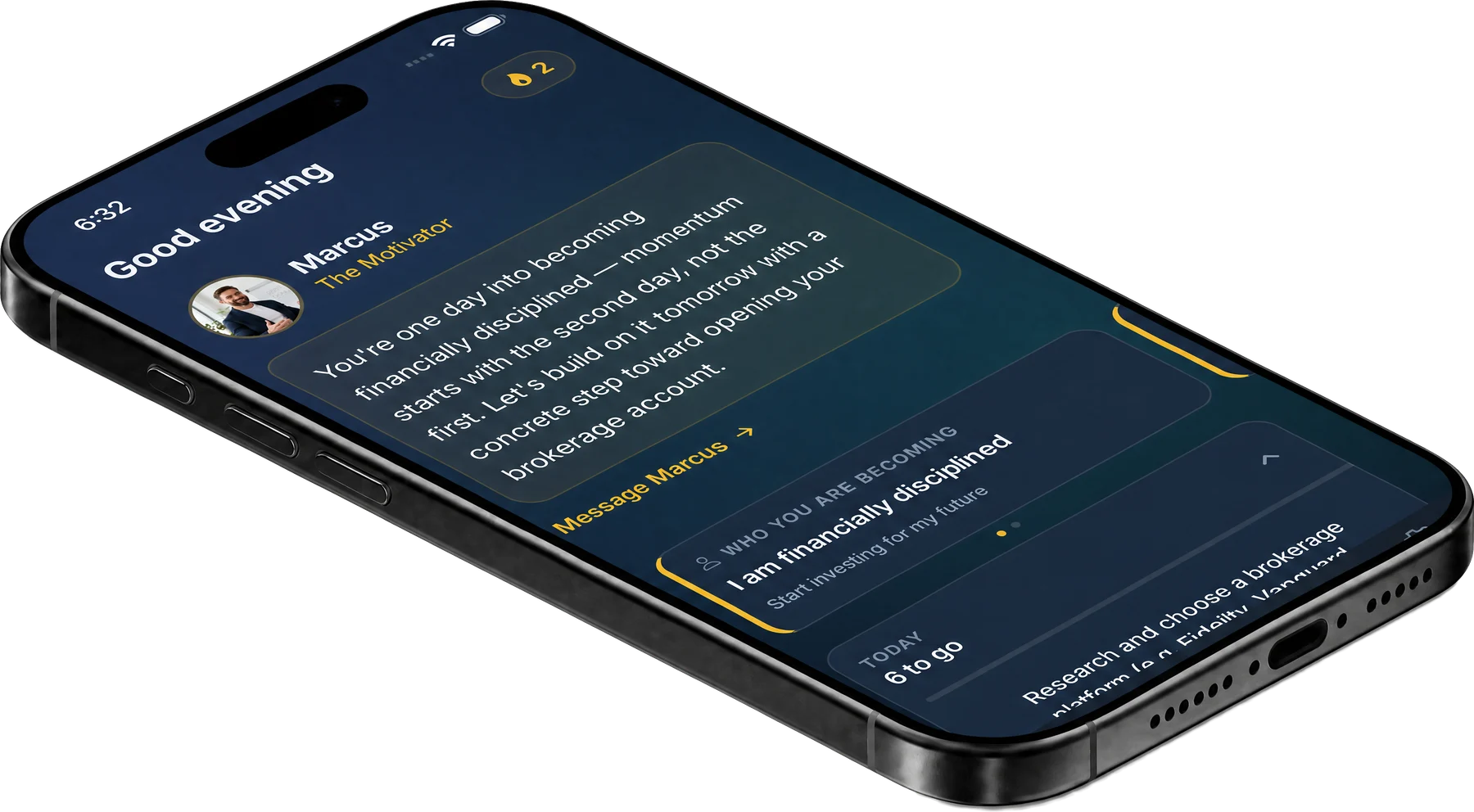
This is also where the difference between kinds of coaching shows most clearly, and it is worth weighing when you choose one. Disclosure first: we build Odyssey, an AI life coach, so weigh that. The design bet the whole product makes is exactly this point. You bring one goal, the coach helps you name the belief under it in your own words and saves it to the goal, the plan carries four or five milestones, and the check-ins and weekly review arrive on a rhythm you set so the topic comes back on schedule instead of when you remember it. Whether you use software or a person, the principle transfers: pick one thing and let it be the standing agenda.
The returning topic also solves next month's version of today's question. You never again need something to talk about, because the standing agenda supplies it: here is where the goal moved, here is where it did not, and here is what that suggests.
What to bring, in five lines
- One thing that has not moved, named in a sentence, with how long
- One line on what you already tried, so the hour starts past it
- A topic whose next move is yours, not somebody else's
- No polished wording; the session's first ten minutes exist to do that
- The same topic next time, on purpose, because returning is the method
Common questions
What do you talk about in a first session with a life coach?
Expect a get-to-know-you opening, then the sharpening work: what you want, where things actually stand, and what a first step looks like. Most coaches run some version of goal, reality, options and commitment, so the hour ends with something specific you agreed to do. Arrive with one sentence about what has not moved and one about what you have tried, and the session builds itself from there.
Can my topic be too small for a life coach?
If the topic matters to you and has resisted your own efforts, it is big enough. A reading habit, a tidier week, one overdue conversation: small topics respond fastest, and they teach you the process cheaply. What makes a topic wrong for coaching is not size but ownership, meaning the next move belongs to someone else, or weight, meaning the season calls for a licensed professional rather than a coach.
What if I do not know what I want to work on?
Then that is the topic. Turning "something needs to change and I cannot name it" into a named want is a standard coaching session, not a failure to prepare for one. Say exactly that sentence in the first five minutes and let the questions do the work. Drift is workable material; it just needs the naming stage first.
Do I need to prepare before a coaching session?
Barely, and over-preparing can get in the way, because a polished brief tends to defend itself. Two sentences is the useful amount: the thing that has not moved, and what you have already tried. For ongoing sessions, a few minutes of honest review beforehand sharpens the hour more than any document would.
What should you not talk about with a life coach?
Anything that is really a health matter belongs with a licensed professional, and a good coach will say so and point you there. Beyond that boundary, topics whose every next move belongs to another person make thin coaching material until they are reframed around your own part. Almost everything else that matters to you is fair game.
The takeaway
The hour is easier to fill than the booking page makes it feel. Six kinds of material cover nearly every session, the first ten minutes exist to sharpen whatever shape yours arrives in, and the topic you bring back is worth more than a new one each time. The bar for entry was never eloquence. It is one thing that has not moved, and the willingness to look at it with company.
One thing to do today. Write the two-sentence brief: one sentence naming the thing that has not moved and for how long, one naming what you have already tried. Ten minutes, no polish, and it is useful whether or not a coach ever reads it, because it is the clearest statement of the problem you have made in years.