Type "life coach app" into a search bar expecting one kind of result, and you get three. A tool for running a coaching business. An app that matches you with a human coach. And, somewhere in the mix, an app that is actually trying to coach you itself.
That split is not a fluke of one bad search. It is the actual shape of the category, and most of the confusion people report about "which app should I get" is really confusion about which of the three they were looking at in the first place.
Here is what each kind is actually built for, checked against where each named product stands today, and the one question that sorts them immediately.
Software for running a coaching practice
Best for: a professional coach or a company buying coaching for its employees. Not for someone looking for a coach of their own.
Rocky.ai is the clearest example, and also the most likely to surprise someone who found it through a plain search. It describes itself as a Coaching Operating System: a no-code platform organizations and coaches use to build their own branded coaching tools, supplying the AI infrastructure, memory and delivery while the buyer supplies the actual coaching content. It is priced for teams, from a build tier through to enterprise, and it is genuinely useful for exactly that buyer. It is not something an individual downloads to get coached.
BetterUp sits in a related spot from a different direction. It combines human coaching sessions with always-on AI coaching, and both halves are real. The catch is who the customer is: BetterUp sells to employers, who then extend it to staff as a benefit. If your company offers it, you can use it. If not, there is no consumer signup that gets you the same thing.
Neither of these is a bad product. They are simply answering a different question than the one most people searching "life coach app" are actually asking.
An app that is itself the coach
Best for: someone who wants the app to do the coaching, not point them toward someone who will.
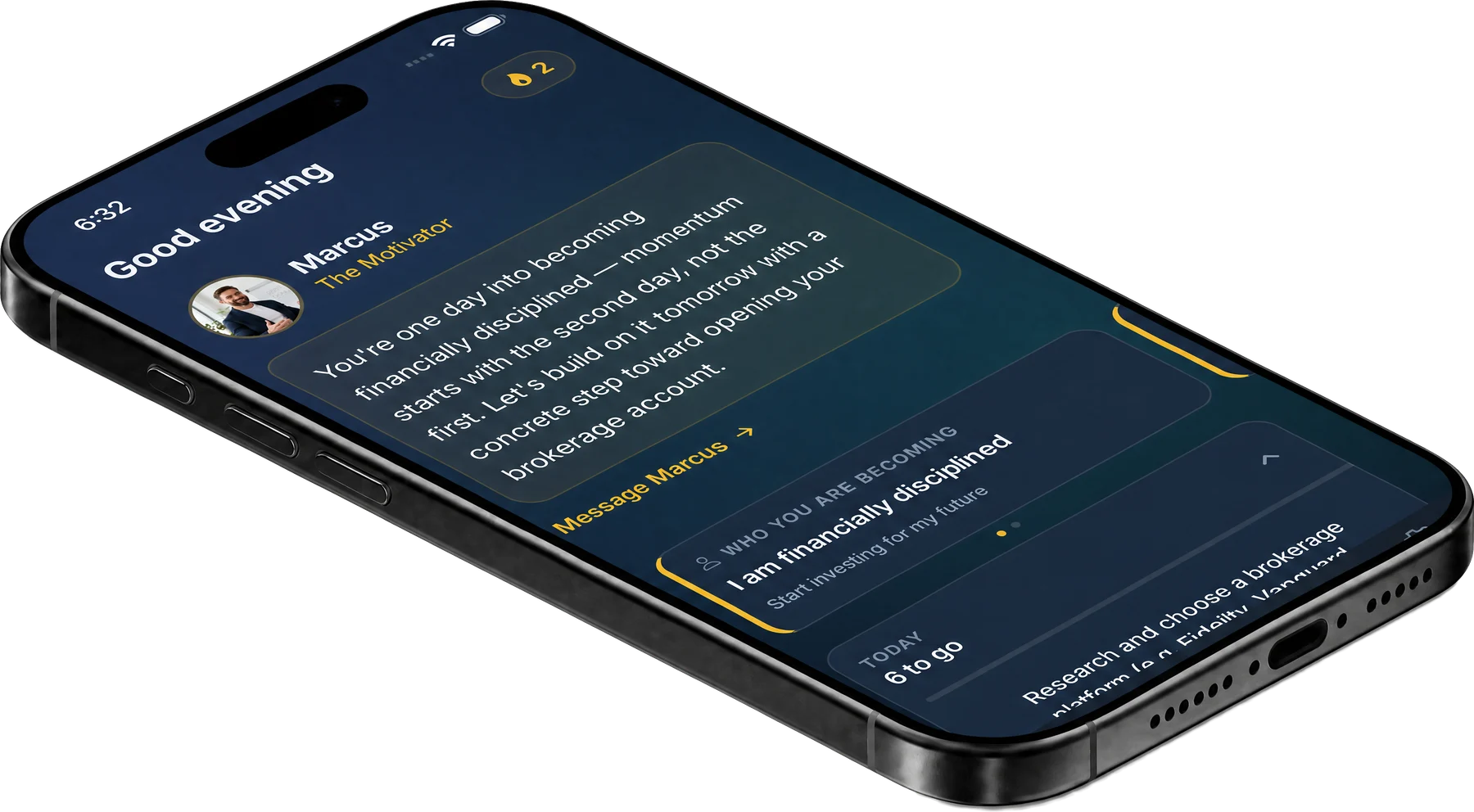
This is the category the phrase implies and the one the two entries above are not. Odyssey is ours, so weigh that: an app where you pick a coach personality, build a goal with them, and the app itself reaches out on the rhythm you set, rather than waiting to be opened. That last part is the whole test for this category: does the product initiate, or does it only respond when you happen to open it. Everything else, the framework it runs, how it holds a goal, is downstream of that one property.
Whether an app in this category can genuinely stand in for a person is a fair question and a different one from whether it is a real coaching product. The trials on the design class are honest about their limits, and the research is worth reading with the nulls included rather than as marketing.
An app that finds you a human coach
Best for: someone who has decided they want a person, and needs a way to find one.
Noomii is the standing example: a directory that lists working coaches, searchable by specialty, that has been cited on this site before for its own research into coaching costs. The app is not the coach. It is the front door to one, and the actual coaching happens off-platform, in whatever format that coach runs their sessions.
Strawberry.me sits in the same category from the marketing side: coaching sold as a relationship with a specific person rather than as software, the same register every human-coach-matching service uses because it is the honest register for what they sell. The real number a human coach costs is worth reading before comparing this category to either of the other two, because the price difference is usually the deciding fact rather than any feature.
A health or habit app with coaching bolted on
Best for: the specific job the app is actually built for, not general life coaching.
Noom is the clearest case: a weight-loss platform built around behavior-change psychology, food tracking, and coaching support that is explicitly AI and human, chat-based, and aimed entirely at that one outcome. Its coaching is real and its scope is narrow on purpose. Someone searching "life coach app" because they actually want help with a stalled career change or a half-finished book will find a capable product doing a job that is not theirs.
The pattern generalizes. A meditation app with a coaching tier, a fitness app with a check-in feature, a journaling app with prompts from a bot: all of these can be excellent at their actual job while being a poor answer to a search phrase that sounds like it means something broader.
The one question that sorts all four
Does it coach you, or does it help someone else coach people? Everything else is downstream of that answer.
- If the answer is "it helps a coach or a company run coaching," you are looking at Rocky.ai or BetterUp, and you are the wrong customer unless you are that coach or that company.
- If the answer is "it finds me a person," you are looking at Noomii or Strawberry.me, and the next question is what that person actually costs.
- If the answer is "it coaches me itself, but only about one specific thing," you are looking at something like Noom, and it is worth keeping for that one thing.
- If the answer is "it coaches me itself, about whatever I bring to it," you have found the actual category the phrase usually means, and the twelve questions that separate a real one from a chat window are the next step.
What a life coach app is, in five lines
- Three unrelated products share the label: practice tools, human-coach finders, and apps that coach you directly
- Rocky.ai and BetterUp are B2B, sold to coaches, companies or employers rather than to you
- Noomii and Strawberry.me find you a person; the coaching happens off the app
- Noom and its cousins coach one specific outcome well and nothing outside it
- Ask whether the product coaches you or helps someone else coach people, first
Common questions
Why did a coaching-business tool show up when I searched for a life coach app?
Because the phrase is genuinely ambiguous and search engines index for the words, not the intent behind them. Rocky.ai and BetterUp are legitimate, well-known products in the broader coaching-technology space, which is enough to rank for the query even though neither is built for an individual looking to be coached.
Is an app that coaches me directly as good as a human coach?
Different rather than strictly better or worse. The honest comparison comes down to availability and price against nuance and rapport: software is present between sessions in a way a human rarely is, and a trained person reads a room in a way software does not yet match.
Should I use a health app like Noom for a goal that is not about weight or food?
Only for the parts that generalize, which is fewer than it looks. The behavior-change psychology transfers reasonably well; the tracking, the coaching content, and the community are all built around the platform's one actual subject, and stretching it to a different goal usually produces a worse version of a purpose-built option.
What if I just want to try being coached before I decide which kind I want?
A free AI life coach is the lowest-cost way to find out whether the fourth category above is the one you actually want, before paying for a human match or committing to a narrower app built around a different goal.
Are Rocky.ai and BetterUp bad products?
No, and it is worth being clear about that. Both are genuinely built for the buyers they target, a coach or company standing up a coaching offering. The mismatch is entirely about who is searching for "life coach app" and what they actually want, not about either product's quality at its own job.
The takeaway
"Life coach app" is not one category with one winner. It is four different products wearing the same three words: tools for running a coaching business, apps that find you a person, apps that coach one narrow outcome well, and apps built to coach you directly about whatever you bring to them. Knowing which one you actually want before comparing features saves most of the confusion the search produces.
One thing to do today. Answer the one question honestly: do you want software that coaches you, or a way to find a person who will? Write the answer down in one sentence, then search again with that sentence instead of the original three words. The results change completely.