The search that leads here usually means one of two things: either money is the constraint, or you suspect the paid products are a chatbot in a nicer shirt and want to test the suspicion first.
Both are reasonable. We sell one of the paid products, so read this knowing that, and knowing the most useful thing we can tell you is the truth: the free version works better than most of the industry admits, and it fails at two specific things.
What free actually gets you, which is a lot
A general chatbot with a good prompt runs a real coaching session.
The frameworks professional coaches use, GROW most commonly, are published, teachable, and not secrets. A capable general model, told to run one and to ask rather than tell, produces a session most people would recognize as coaching: what do you want, where are you honestly, what are the options, what happens this week.
That covers the first of the two problems people bring to coaching, which is not knowing what to do. For thinking something through at eleven at night, free is genuinely good, and anyone who tells you otherwise is selling.
The full set of GROW questions is on this site, free, written to be run with a notebook. That is how unsecret the machinery is.
The two things no free tool does
Both failures are structural, and it helps to know why, because it tells you what you would actually be paying for.
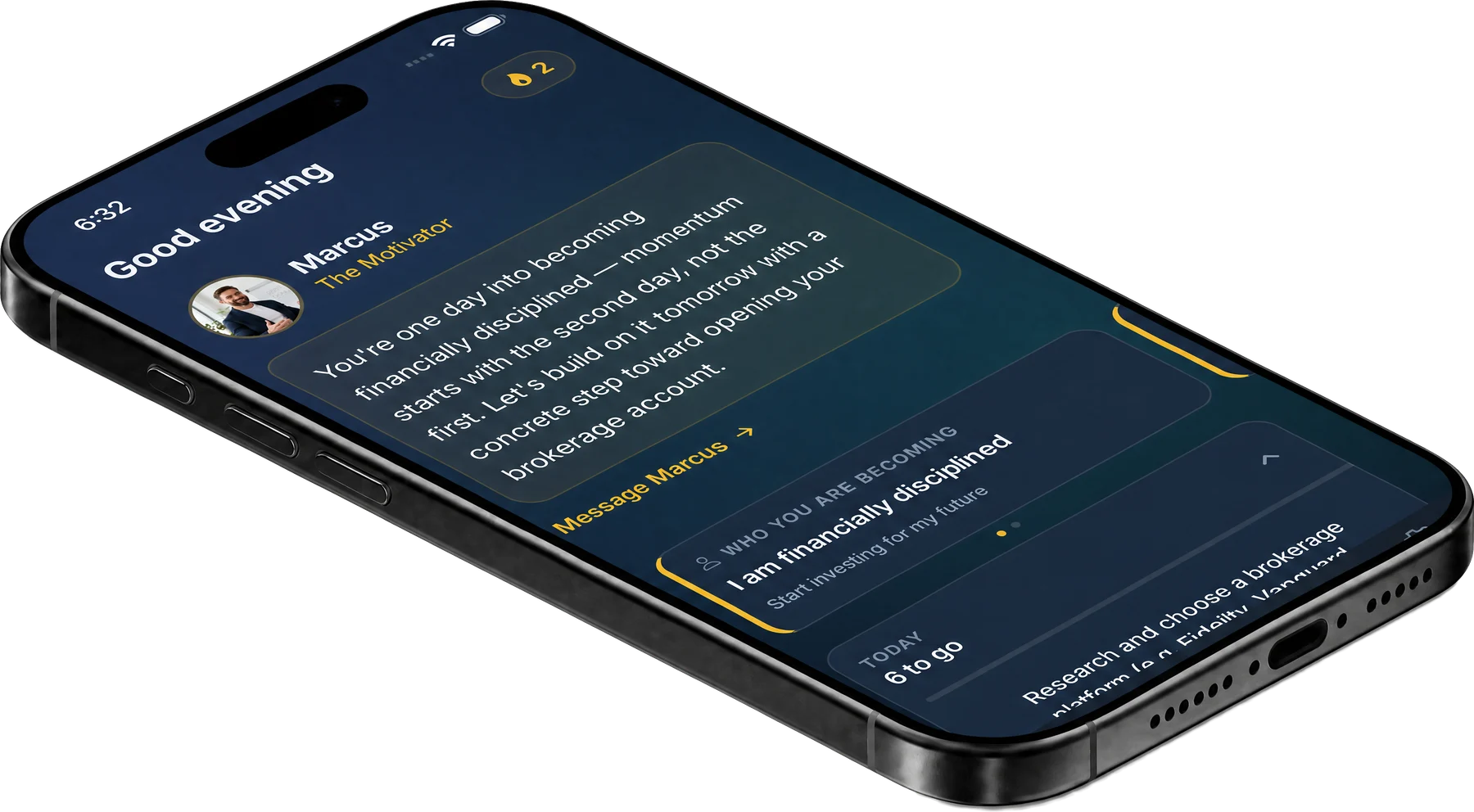
Nothing free initiates. A chat window is a room you have to decide to enter. On a good week you enter it. On the week the goal is slipping, which is the week coaching earns its keep, you do not, and nothing arrives to ask why. Scheduled, personalized, outbound contact costs compute per user every single week, which is precisely the feature a free tier cannot afford to give away. This is economics, not malice.
Nothing free remembers structurally. A general chatbot holds a conversation, not a goal. Come back in three weeks and the plan, the commitments, the belief you reframed in week two are wherever the old thread is, and the new session starts from zero unless you rebuild the context by hand.
Worth knowing: the second failure compounds the first. The week you skipped is exactly the week the context is most out of date, so the re-explaining tax is highest at the moment your motivation is lowest. The full ChatGPT comparison walks the mechanics.
The honest free setup, if you run it properly
Most people using a chatbot as a coach use it casually and conclude the category is shallow. Run it like a system for one month instead.
- Write one standing prompt and save it somewhere. Who the coach is, the framework to run, your goal in one sentence, and an instruction to push back. Reuse it every session rather than improvising.
- Keep the goal in one document, not in the chat. Plan, milestones, commitments, and what happened each week. Paste the relevant part in at the start of each session. You are doing the memory's job by hand; do it in one place.
- Book the session with yourself, weekly, same slot. The chatbot cannot initiate, so the calendar has to.
- End every session with one dated commitment, written into the document.
- Give the asking job to a human. One person, one text a week, one sentence you wrote for them. That is the one-way favor, it is free, and it covers the initiating gap better than any prompt.
- Run the three review questions on Sunday, in the same document, and paste last week's answers into the next session.
That setup is genuinely free and genuinely works. It also makes plain what the paid category is charging for: everything on that list that you just became personally responsible for doing every week.
Go further: coaching is one job on a wider shelf. The top self improvement apps, sorted by job covers the rest, including the picks that are genuinely free.
When free is the right answer
Three cases, stated plainly by a vendor.
- Your problem is deciding, not doing. Career options, a business idea, a hard conversation to think through. Free covers this well, possibly indefinitely.
- You are testing whether you would even use coaching. A month of the setup above answers that for nothing.
- Money is genuinely tight. The free version plus one human asking beats a subscription you resent, every time.
When paying starts to make sense
One test: what happened in week three of the free setup?
If the sessions still happened, the document stayed alive, and your one person kept asking, you have a working system. Keep it. Honestly.
If it quietly stopped, you have learned the useful thing: the conversation was never your bottleneck. The initiating was. That is the specific thing the paid category exists to supply, and it is the property to interrogate before paying anyone: the twelve questions start there.
The wrong reason to pay is conversation quality. Free conversation is good now. The right reason is delivery: something arriving on a rhythm you set, with your commitment named in it, on the week you stopped showing up.
Free vs paid, in five lines
- The session itself: free, and genuinely good
- The frameworks: published, free, on this site
- Structured memory of your goal: paid, or you by hand
- Anything arriving without you opening an app: paid, structurally
- The asking, done by a person: free, and better than software anyway
Common questions
Is there a completely free AI life coach app?
Free tiers exist across the category, and they cluster around the same shape: conversation included, initiating and memory limited or absent, because those are the parts that cost per user. Evaluate any free tier against the two structural gaps above rather than against its conversation, which is the part that is always fine.
Is ChatGPT good enough as a life coach?
For sessions, largely yes, and it is worth knowing before paying for anything. For a goal that runs across months, the fresh-session problem is the ceiling: nothing carries forward and nothing arrives. The direct comparison covers where that ceiling sits.
What should a free-version prompt say?
Four things: the role, the framework by name, your goal in one sentence, and an instruction to challenge you rather than agree. Keep it saved and reuse it. The improvement over an improvised "act as a life coach" is large.
Do free trials of paid apps count as the free option?
They answer a different question. A trial tells you whether that product's initiating and memory are real, and the two-week protocol gets the answer efficiently. It does not give you a permanent free system, which is what this page is about.
What does the paid version of this site's product cost?
Both plans are on the pricing page, next to the human-coach figures, so the comparison is one screen. This article deliberately carries no prices; they drift, and that page is where they live.
The takeaway
Free gets you the conversation, and the conversation is most of what people imagine coaching is. It is not the part that moves a stalled goal. The parts that do, something arriving on its own and a memory that holds the plan, are exactly the parts free tools structurally cannot carry.
So run the free setup properly. If it holds, you have a working system. If week three goes quiet, you have learned the useful thing at zero cost: the conversation was never the bottleneck, the initiating was, and that is precisely the half the paid category supplies. A goal that has already waited six years does not owe the experiment a month first.
One thing to do today. Write the standing prompt and put a weekly session in the calendar. The month-long experiment starts free and the result is information either way.