The question usually shows up after someone has already tried the obvious fix. A life coach did not move the thing that was actually stuck. A well-meaning friend agreed to "check in" and then did not. A course got finished and the next one never got started. Somewhere in that search, "accountability coach" turns up, next to "life coach" and "mentor" and "accountability partner," and the four terms get used as if they were interchangeable.
They are not. Each one is a genuinely different job, and knowing which job you actually have is most of the decision.
Here is what an accountability coach's role specifically covers, how it is different from the other three, what it tends to cost, and where a software version does and does not substitute.
An accountability coach's job is narrower than a life coach's, and that is what makes it work
The work is following through on a plan you already made, not deciding what the plan should be.
A life coach's conversation ranges across the whole question: what you want, why you want it, what is in the way, whether the goal is even the right one. That session covers a lot of ground, and most of it is about figuring out what to do.
An accountability coach starts after that question is already answered. The plan exists. The commitment is named. The job is narrower and more mechanical on purpose: did you do the thing you said you would do, and if not, what happened. A good accountability coach does not spend much time asking why you want the goal. They spend their time asking whether Tuesday's specific commitment happened, in the same blunt way every time, because the blunt repetition is the product.
That narrowness is the whole value. A role that tried to do both, the figuring-out and the following-through, would do each one worse, the way a single meeting that tries to be a strategy session and a weekly check-in usually accomplishes neither well.
The difference from a life coach is scope, not skill
A life coach works on the goal. An accountability coach works on whether you do what the goal already requires.
This is easy to get backwards, because both roles can look similar from the outside: a recurring conversation about a goal, with someone taking notes. The difference is what the conversation is for.
A life coach's session has room for a belief that is quietly working against the goal, a plan that turns out to be sized wrong, or a goal that was inherited rather than actually wanted. An accountability coach's session does not go there. If the honest answer to "why didn't you do it" is "I'm not sure I actually want this," a good accountability coach will say that is a different conversation and point you back to whatever set the goal in the first place, rather than trying to re-litigate it themselves.
That is not a limitation to work around. It is the reason the role is cheap enough to exist at the frequency it needs to exist at. A real strategy conversation takes an hour and preparation. "Did the two sessions happen" takes two minutes and needs none, which is why an accountability relationship can run weekly where a life-coaching relationship usually cannot.
Worth knowing: the two are not competitors. The goal-setting conversation itself is what produces the specific, dated commitment an accountability coach needs in order to have anything to ask about. Skip that step and even a good accountability coach ends up asking how the week went in general, which is the version that does not work.
The difference from a mentor, and from a friend who said they would help
A mentor has expertise. An accountability coach has asymmetry. Neither one is the other.
A mentor's value is specific domain knowledge: they have done the thing you are trying to do, and they can tell you what actually matters and what does not. That is enormously useful and it answers a different question than "did you do it." A mentor who tries to also be your accountability coach tends to default to advice, because advice is the instinct of somebody who knows the domain, and advice is not what a stalled commitment needs.
A friend is the other common substitute, and it fails for a structural reason rather than a character one: two people with their own unrelated goals, checking in on each other, both have an incentive toward mutual absolution. Nobody behaves badly. The arrangement just has no asymmetry in it, and asymmetry is the actual ingredient. An accountability coach does not need you to excuse their missed week, because they do not have a parallel goal riding on the same conversation. Neither does a class you paid for, which is most of why a booked session works better than a mutual check-in with a peer.
What one costs, and what that number is actually buying
The fee is for the asymmetry, not for advice. That is worth being honest about before comparing it to a free alternative.
An accountability coach is coaching, priced like coaching generally, which means it is a real recurring cost rather than a one-time purchase. The going market rate for a human coach, sourced from the professional bodies that publish it, is the number to look at if you want a concrete range; it is not specific to the accountability-only version of the role, but the pricing logic is the same, because what is being sold is a person's time and attention on a schedule, not a document or a template.
What that fee buys is the one thing a free arrangement structurally struggles to supply: somebody with no reciprocal exposure, who turns up whether or not you feel like being turned up for. Paying for a slot is a way of manufacturing asymmetry on purpose, which is also why a paid class works on people who cannot stick to the identical workout at home.
Where software fits, and where it stops
A product can reliably supply the part of this role that is about showing up on schedule. It cannot supply the part that is about a person whose opinion of you matters.
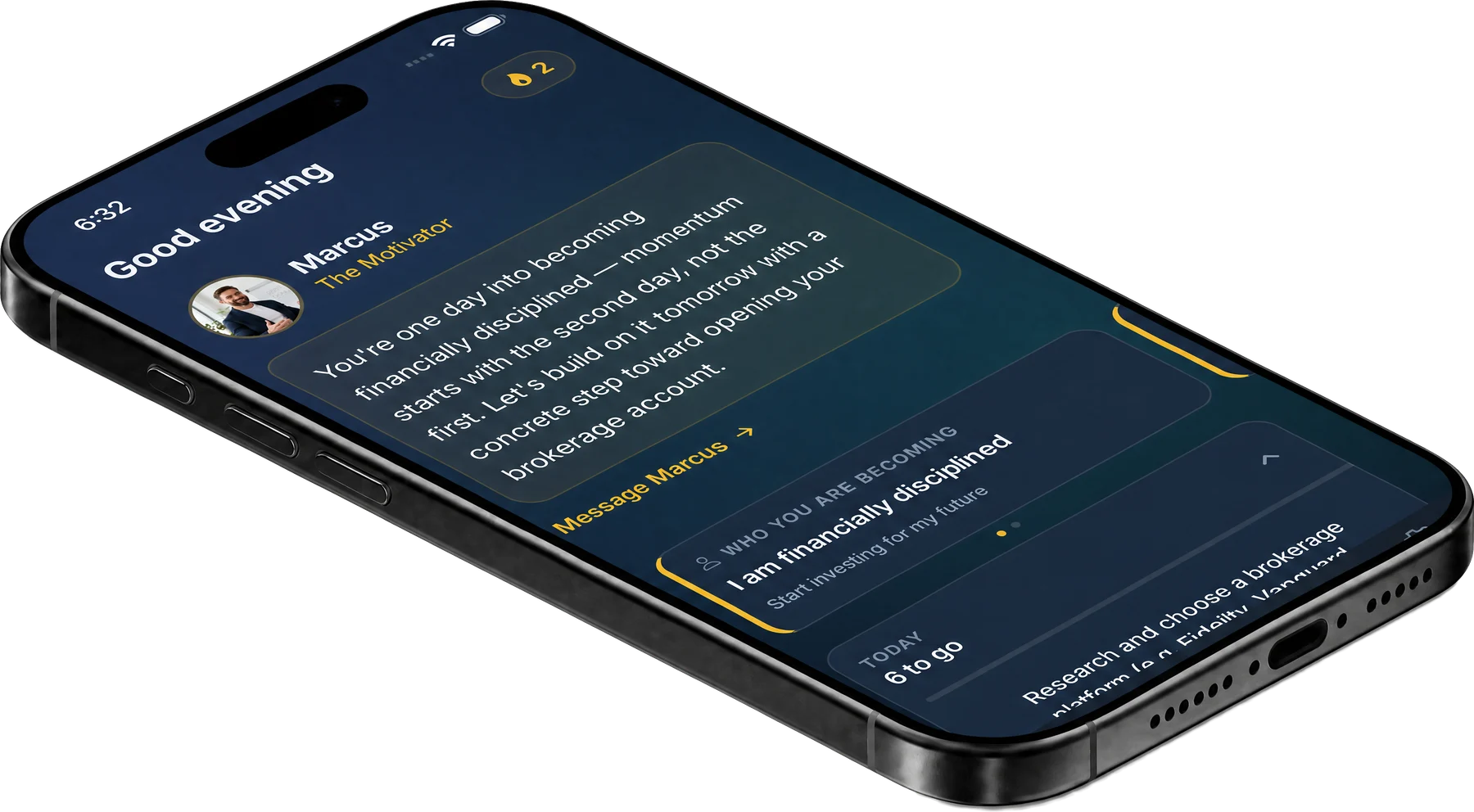
Search for a software version of this role and the results split into two different mechanics wearing the same label: something you open yourself and answer a prompt inside, and something that arrives on its own and names the specific commitment. Only the second kind is actually doing the job an accountability coach does, and it is worth checking which kind a given product is before paying for it, because the two are not the same purchase even when the marketing copy reads identically.
Disclosure: we build Odyssey, an AI coaching app, so weigh that. What it adds over the reflection-only kind is the outreach itself: a check-in that arrives on the rhythm you set, with the coach's own sentence about your specific plan written into it in advance, rather than a prompt waiting for you to open it. What it does not add is the social weight of a person whose regard you actually care about, which is the real engine behind a good human accountability coach and is not something any software reproduces.
How to tell which one you actually need
Name where your week actually breaks down, and match the role to that point rather than to the label that sounds most serious.
- If the honest problem is that you do not know what to do next, that is a life-coaching question, and an accountability coach will not help you answer it.
- If the plan is fine and specific commitments keep quietly not happening, that is exactly what an accountability coach's role is built for.
- If you want deep domain knowledge about how to do the thing itself, that is a mentor's job, and it is a different skill from either of the above.
- If you cannot afford either and a person is available at all, the one-way favor is the cheapest arrangement that still has the asymmetry property, and it is worth trying before paying for any of this.
What an accountability coach actually does, in five lines
- The job is following through on a plan, not building the plan
- Scope is the difference from a life coach, not skill or seriousness
- A mentor supplies expertise; a friend supplies symmetry; neither supplies asymmetry
- The fee buys someone with no reciprocal exposure to your missed week
- Software can reproduce the schedule and cannot reproduce the person
Common questions
Is an accountability coach the same as a life coach?
No. A life coach works on the goal itself, including what it is and whether it is sized right. An accountability coach works on whether you do what the goal already requires, once that question is settled. Some coaches do both across a longer relationship, but the two halves of the work are genuinely different conversations.
Do I need an accountability coach or a mentor?
Depends on where the gap actually is. A mentor's value is specific knowledge about the thing you are trying to do. An accountability coach's value is showing up on a schedule and asking a specific question. If you already know what to do and keep not doing it, that is the accountability gap. If you genuinely do not know what the right move is, that is the mentor's job, not the accountability coach's.
Can a friend just be my accountability coach for free?
Not in the same way, and it is worth knowing why before trying it. The coach's asymmetry is structural: no competing goal of their own riding on the same check-in. A friend usually does have one, which is what makes mutual check-ins between friends decay into pleasant catch-ups within a couple of months. A one-way favor, rather than a mutual arrangement, gets closer to the real thing for free.
What should an accountability coach actually ask me?
Something specific and dated, not "how's it going." "Did you do the Tuesday session" has a yes-or-no answer; "how's the book coming along" does not, and it lets both of you off the hook. If a paid accountability arrangement is asking the vague version, it is not doing the job it is being paid for.
Is it worth paying for one instead of using an app?
Depends on which property you are actually missing. If it is the schedule and the specific question, a product that genuinely initiates rather than waits to be opened can supply that part. If it is the social weight of disappointing someone whose opinion you care about, no product supplies that, and a paid human is the only thing on this list that does.
The takeaway
The four roles get used interchangeably because they all involve a recurring conversation about a goal, and that surface similarity hides a real difference in what each one is actually for. A life coach works on the goal. A mentor supplies expertise about the domain. A friend offers company without the asymmetry that makes accountability work. An accountability coach's whole job is the narrow one: did the specific thing happen, asked the same blunt way every time.
One thing to do today. Write down the single most recent commitment you quietly let slide, then name which of the four roles above would actually have caught it: a person who knew what to do, a person with domain knowledge, a peer, or someone whose only job was asking that one question on schedule. The answer is usually more specific than "I need accountability," and it tells you exactly what to go looking for.