Search for coaching versus mentoring and nearly every page assumes you are an HR manager designing a program for a team. The comparisons are about formal structures, matching processes and return on training budgets. They are accurate and almost useless to someone asking the question for themselves.
The personal version of the question is simpler and more pressing. You have a goal that has not moved: a career change, a business, a book. Someone has suggested you find a mentor, someone else has suggested a coach, and the two words are used as if they meant roughly the same thing.
They do not, and the difference is practical. Each one fixes a different kind of stall, and picking the wrong one is how people end up with excellent advice and an unchanged calendar.
This page covers what each one actually is, the differences that matter for a personal goal, how to tell which one you need, and how to get either without a workplace program behind you.
A mentor lends experience; a coach works on your thinking
A mentor has done the thing and tells you what they learned. A coach does not need to have done it, and helps you work out and follow through on your own version.
The clearest way to see the difference is to ask where the answers come from.
- In mentoring, the answers come from the mentor. They have built the business, made the career move or published the book, and their value is knowing what matters, what does not and what they would do differently. The conversation is mostly them sharing judgment you do not have yet.
- In coaching, the answers come from you. A coach asks questions about what you want, where you are now and what keeps getting in the way, then helps you turn the answers into a plan and checks on it. The method is usually a structured framework, such as the GROW questions, rather than a personal story.
Neither is better in general. A first-time founder asking how to price a service needs someone who has priced one. A founder who knows the price and has not sent a proposal in six weeks needs something else entirely. What a life coach actually does walks through a session in detail if the coaching side is the less familiar one.
The differences that matter for a personal goal
Outside the workplace, five differences decide which one helps. Cadence is the one most people underestimate.
- Agenda. A mentor's conversation often follows their experience and what they think matters. A coaching conversation follows your goal and your stated priorities, even when the coach would have chosen differently.
- Expertise. A mentor needs deep knowledge of your field or path. A coach needs skill at questions, structure and follow-up, and is often more useful for not sharing your assumptions about how things are done.
- Cadence. Mentoring is usually occasional: a coffee every couple of months, an email when you are stuck. Coaching is usually scheduled and regular, and it returns to the same goal whether or not you feel like talking about it.
- Accountability. A mentor rarely asks whether you did what you said, and would feel odd doing so. Checking that is a central part of a coach's job.
- Relationship and cost. Mentoring is typically unpaid and rests on goodwill, which limits how much you can ask of it. Coaching is typically a paid, defined arrangement, which is what makes regular follow-up reasonable to expect.
Cadence is the one that decides most stalled goals. Advice delivered once a quarter, however good, arrives into a life that has to carry the goal through the other twelve weeks alone. An accountability coach exists almost entirely to fill those weeks, and it is a narrower job than either of the two compared here.
Worth knowing: a mentor who tries to also act as your accountability partner usually drifts back to advice, because advice is what expertise wants to give. That is not a failing of the mentor. It is a sign the role you need is a different one.
How to tell which one your goal is missing
Ask whether you are short of knowledge or short of follow-through. The answer usually picks the role for you.
Two quick questions sort most cases:
- Could you write the next three steps right now? If not, because you genuinely do not know what the path involves, that is a knowledge gap, and a mentor who has walked it closes it faster than anything else.
- Have those same steps been on your list for months? If you can write them and they keep not happening, that is a follow-through gap. More advice adds to the pile of things you already know. Someone asking every week whether the step happened is what changes the pattern.
For a working adult with a long-held personal goal, the second case is far more common. The person who has wanted to write a book for ten years usually knows that books are written by writing regularly. The person circling a career change usually knows their next step is a conversation they have not booked. Wanting something badly makes it expensive to start, and no amount of expertise lowers that cost.
There is a mixed case worth naming. Career changes in particular often need both: a mentor in the target field to say what the work is really like, and some form of coaching to make sure the exploratory conversations actually happen. The deciding half of a career change covers how the two fit together.
You can use both, and the order matters
When a goal needs both, start with the mentor for direction, then keep the coaching for the months after.
A useful sequence for a goal you have carried a long time:
- One or two mentor conversations first. Ask what they wish they had known, what the first year really involved and what most people get wrong. You are looking for a realistic picture, not a plan.
- Then turn that picture into milestones. Four or five, with a first step you can take this week. This is where a coaching structure helps, because it converts general wisdom into something on the calendar.
- Then keep a regular check. Weekly, or every other week at most, on the same goal, asking what moved and what got in the way. Go back to the mentor when you hit a question only experience can answer.
Used this way, each role does what it is good at, and neither is stretched into the other's job.
Getting either without a workplace program
Mentors are found through asking, and coaching now comes in more formats and price points than it used to.
Most coaching and mentoring pages assume an employer is arranging it. For a personal goal you are usually on your own, and both are still reachable:
- Finding a mentor. Look for someone two or three steps ahead of you rather than at the top of the field, since they remember the early stage and have more time. Ask for one specific conversation with a clear question, not an open-ended mentoring relationship. Good one-off conversations often turn into ongoing ones on their own.
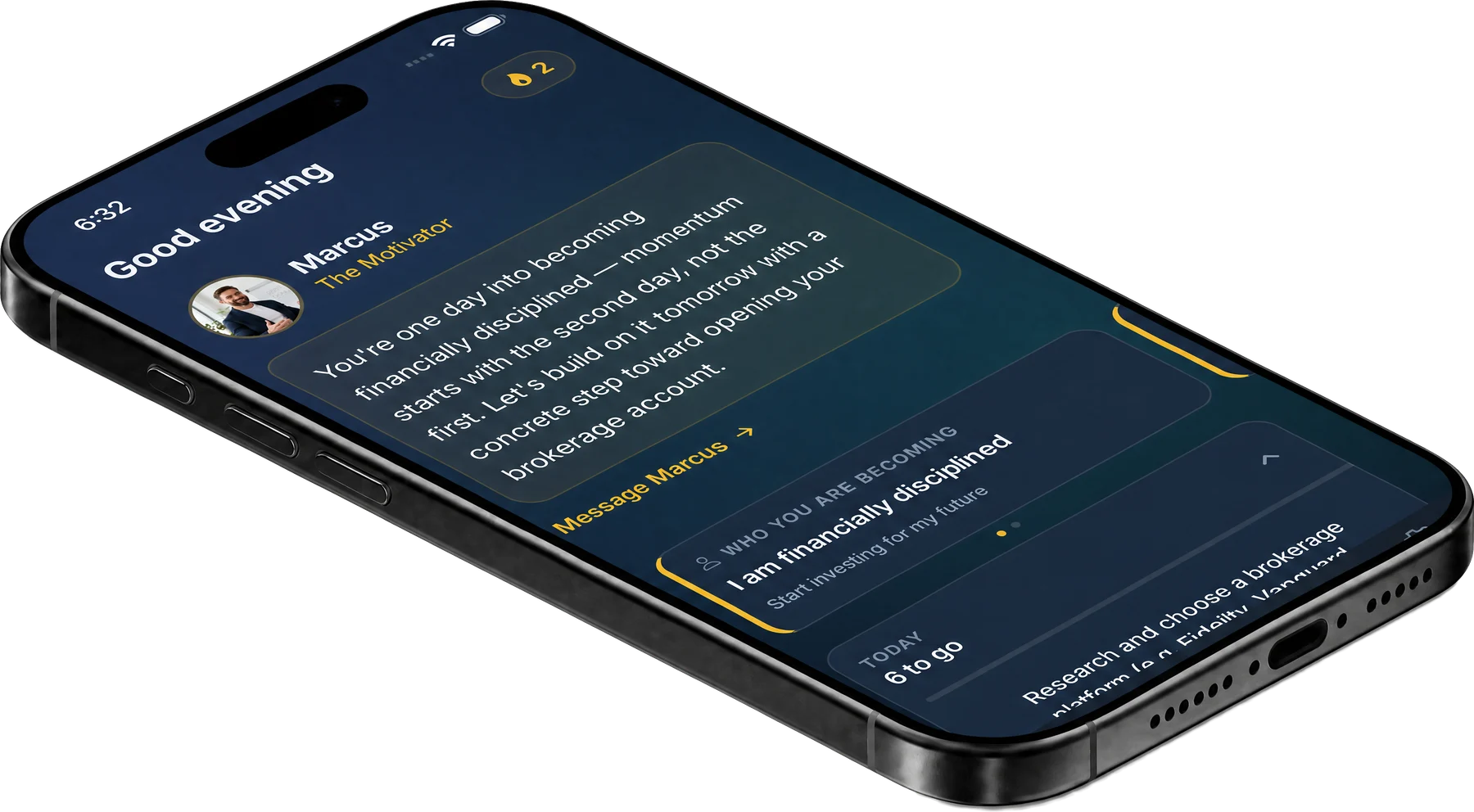
- Getting coaching. A human coach is the most personal option and the most expensive; what a life coach costs lays out the market. Group programs and shorter engagements cost less. AI coaching is the newest format and the cheapest by a distance. Disclosure: we build one, so weigh this accordingly. In Odyssey your coach works through the goal with you, breaks it into milestones and checks in on a rhythm you set, which covers the cadence a mentor cannot. Whether an AI coach is worth it sets out the honest case for and against.
- The free version of the follow-up. A friend who agrees to ask one question every Sunday covers a surprising amount of what coaching does between sessions. Setting that up so it lasts takes some care, because the obvious version tends to fade.
Coaching vs mentoring, in five lines
- A mentor shares experience; a coach works on your goals and your thinking
- Mentoring is occasional and advice-led; coaching is scheduled and returns to the same goal
- Short of knowledge about the path: find a mentor
- Short of follow-through on steps you already know: find coaching in some form
- For long-held goals, use a mentor for direction and coaching for the months after
Common questions
What is the difference between coaching and mentoring?
Mentoring is guidance from someone who has done what you are trying to do and shares their experience and judgment. Coaching is a structured process where the coach asks questions, helps you set and plan your own goals, and follows up regularly on progress. A mentor mainly supplies answers; a coach mainly helps you find and act on yours.
Is a coach or a mentor better for personal goals?
It depends on what is missing. If you do not know what the path involves, a mentor with relevant experience helps most. If you know what to do and it keeps not happening, coaching helps more, because its regular follow-up addresses the gap that advice does not. Many long-held personal goals are the second kind.
Can a mentor also be a coach?
Some people do both well, but the roles pull in different directions. A mentor's instinct is to share what they know, while a coach's job is to ask and to follow up even when they would have chosen differently. It usually works better to be clear about which role you are asking someone to play.
Do coaches need experience in my field?
Not necessarily. A coach's value lies in structure, questions and follow-up rather than in domain knowledge, and an outside view can help precisely because it does not share your field's assumptions. If you need field-specific knowledge, that is a job for a mentor alongside the coaching.
How do I find a mentor outside work?
Look for someone a few steps ahead of you on the path rather than at the very top, and ask for one conversation with a specific question. Professional groups, alumni networks, online communities around your goal and friends of friends are the usual routes. A focused first request is easier to say yes to than an open-ended mentoring relationship.
The takeaway
Coaching and mentoring are not two names for the same help. A mentor gives you the knowledge of someone who has been there. A coach gives you structure and a regular return to your own goal. Work out which one your goal is short of, and if it has been stalled for years despite good advice, the answer is usually the second.
One thing to do today. Write down the goal you most want to move and, under it, the next three steps. If you cannot write them, list two people a few steps ahead of you and send one of them a single specific question. If you can write them and they are old, decide who or what will ask you every week whether the first one happened.