Two people decide, on the same afternoon, to finally deal with the same stalled goal. One opens the Notes app and types a sentence. The other brings the sentence to a first session with a coach.
A week later the sentence in the Notes app is still a sentence. The other one has been picked apart, defended, written down properly, and given a date to be checked on. Nothing about the second person is more disciplined than the first. The goal went through a different process, and the process is the entire difference.
Here is what actually happens in that process, mechanic by mechanic, and why none of it happens to a goal left alone in an app.
The goal gets tested before it gets trusted
A coach will not let a topic pass as a goal. "Get fit," "write the book," "deal with the career thing" all get stopped at the door.
Left alone, a goal usually stays exactly as vague as the sentence that first described it, because nothing forces it to get more specific. The GROW framework is the ordinary version of what a coach runs here, and its first two stages are the two that solo goal-setting reliably skips.
The first is naming an actual end state. Not a direction, an outcome you could hold up against reality and get a yes or a no. "Get fit" survives unexamined for years because it never has to answer "how would you know."
The second is the uncomfortable one: where you honestly are right now, not where the plan assumes you are. A coach asks for a number, one to ten, and then makes you justify it. The gap between the number you say first and the number you can actually defend is where most goals have been quietly living, sometimes for a long time.
Neither question is hard to ask yourself. What is hard is not skipping the one you do not enjoy, which is precisely what happens when there is nobody else in the room to notice you skipped it.
The failure gets drafted before day one
A coach treats "what could stop this" as a scheduled step, not a thought that might occur to you in month three if things go badly enough.
A pre-mortem is the specific technique: imagine the goal has already failed, six months out, and explain why in the past tense. It takes twenty minutes and it produces something concrete, a handful of if-then lines rather than a vague sense that things sometimes go wrong. If the Tuesday slot goes, the session happens Saturday before ten. If the draft is bad at three chapters, keep going to five before deciding anything.
Almost nobody runs this on their own goals, for a reason that is not laziness. Predicting your own failure while you are still enthusiastic feels like betting against yourself, and most people would rather not. A coach can ask the question without it costing either of you anything, because it is not your doubt in the room. It is a technique somebody is running on your behalf.
The output sits next to the plan rather than in a separate document nobody reopens, which is the part that actually makes it useful later.
The goal becomes a record, not a sentence
Written down once, a goal is a sentence you have to remember to reread. Set with a coach, it becomes something that gets referred back to on purpose.
This is the least dramatic difference and it may be the one that matters most over months rather than weeks. A coach remembers which session the Thursday slot first moved, not because they are more attentive than you but because tracking your own pattern while you are inside it is genuinely harder than tracking someone else's. Nobody spots their own third time.
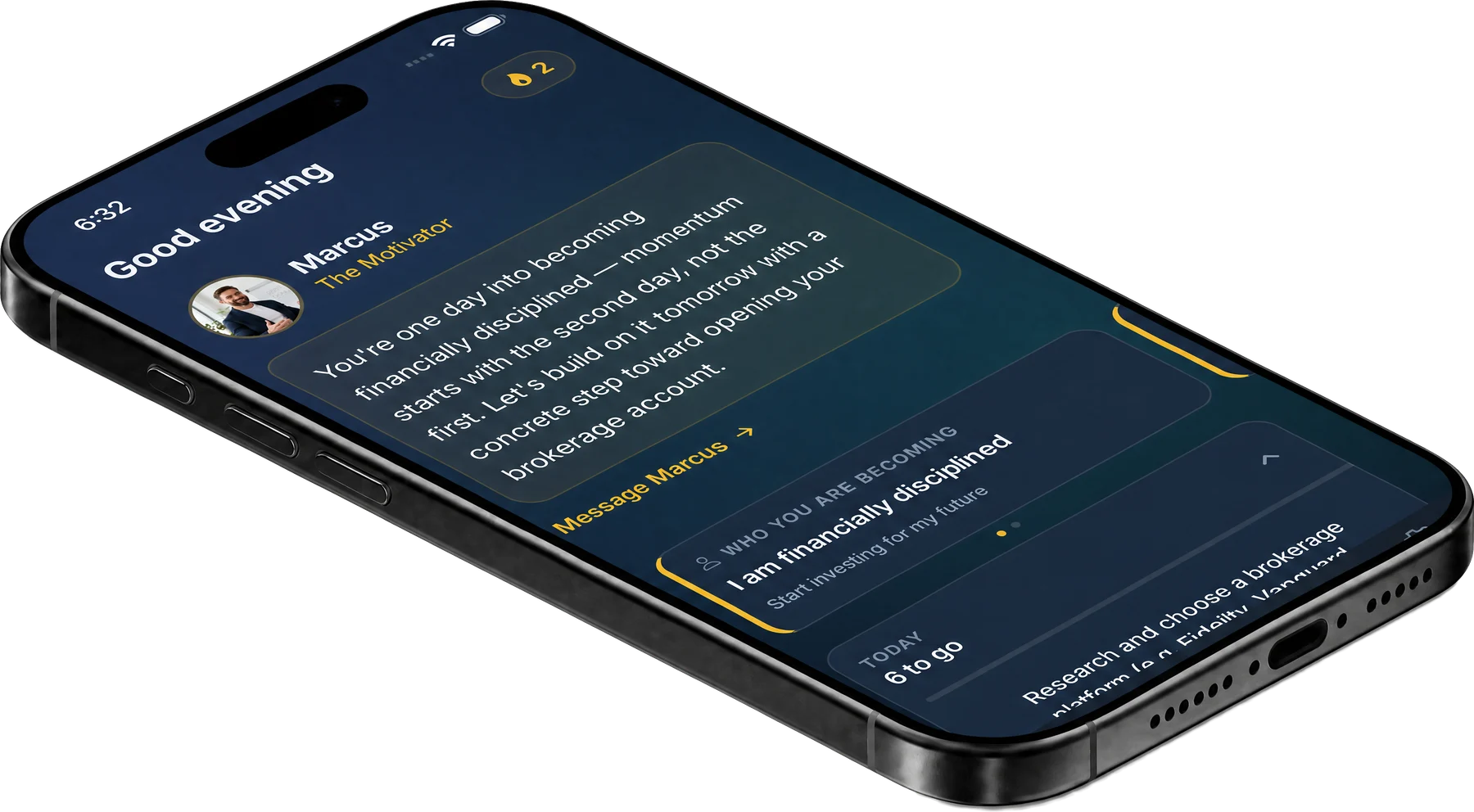
That is also the honest case for the software category: not that it coaches better than a person, but that a goal held as a record someone or something returns to is a structurally different object from a goal held only in your own memory. We build Odyssey, an AI coaching app, so weigh that: what it adds here is not more storage than a notes app already gives you, it is a coach that reaches out about the specific thing on the rhythm you set, with the goal on hand rather than reconstructed from scratch each time.
The plan itself should still be short. Four or five steps, not twelve, because a long list is a menu you negotiate with and a record is only useful if it says something a half-finished list cannot.
Review gets a date before the goal gets a start
The fifth stage most self-help frameworks leave out is the one that decides whether any of the first four mattered.
OSCAR, the close cousin of GROW that a lot of coaches actually run, spells out Outcome, Situation, Choices, Actions and then Review. The first four map onto the goal-setting session almost exactly. The fifth is the one that gets skipped when there is no coach in the loop, because "I'll check on this later" is not a plan, it is a hope wearing a plan's clothes.
Setting the review date at the same time as the goal, rather than after the goal has already started drifting, is a small move with an outsized effect. Three questions, fifteen minutes, on a fixed day catches a goal going quiet while it is still one flat week rather than a month of silence you now have to explain. It is also the mechanism underneath staying consistent once the goal is running: consistency held by a scheduled review survives the weeks that consistency held by good intentions does not.
Worth knowing: a coach who runs this on a rhythm you set is not watching you between sessions. The review happens because it was scheduled, not because something noticed you had gone quiet.
What stalls gets a name, not a verdict
A coach can usually tell the difference between a goal that is wrongly sized and a goal you have quietly stopped wanting, and treats them as two different problems.
Left alone, both failures get read the same way: as evidence about your character. A goal that keeps failing because the step is too big and a goal that keeps failing because you never actually wanted it both produce the identical Tuesday-night feeling of having let yourself down again, and without somebody asking the right question, they get the identical fix, which is trying harder.
A coach sorts them. If the size is the problem, the answer is the plan coming back smaller, not you coming back with more resolve. If the wanting is the problem, that is worth finding out directly rather than discovering it eighteen months later as a quiet, unexplained loss of interest. Sometimes what is actually stalling a goal is a specific belief about yourself sitting underneath it, and naming that belief, in your own words, is a different job from resizing a commitment. A coach who has spent an hour with the goal already knows which one they are looking at.
What this replaces
A SMART worksheet, a vision board and a New Year's resolution all do the same job, and it is the job a Notes app does: they hold a sentence.
None of them tests the outcome against reality, drafts the failure in advance, schedules a review, or asks whether a stalled goal is wrongly sized or quietly unwanted. That is not a criticism of any of them individually. It is the reason a well-intentioned goal-setting exercise and an actual goal-setting process can produce the same paragraph on paper and completely different results six months later.
The four mechanics above are not exotic. Any of them can be run alone, with a notebook, in about forty minutes. What is hard to do alone is the thing that makes them stick: coming back to check.
Setting a goal with a coach, in five lines
- The outcome and the honest starting point get tested before the goal counts as set
- The failure gets predicted and turned into if-then lines while you can still be honest about it
- The goal becomes something referred back to, not a sentence you have to remember on your own
- The review date gets fixed at the same time as the goal, not improvised once things go quiet
- What stalls it gets sorted into wrong size or wrong want, and answered differently
Common questions
What is different about setting a goal with a coach versus setting it alone?
Four things: the outcome and your honest starting point get tested rather than assumed, the likely failure gets drafted in advance rather than discovered later, the goal is held as something you return to rather than a sentence you have to remember, and a review date gets fixed before the goal starts rather than improvised once it has already gone quiet.
Can I run this process by myself?
Mostly, yes. GROW's questions, a written pre-mortem and a scheduled weekly review all work on paper, alone, in well under an hour combined. What is hardest to replicate alone is the part where somebody else notices the pattern you cannot see in yourself and makes you come back to check on the specific thing, which is the piece coaching software exists to cover.
Do I need a professional life coach for this, or does an app work?
Depends what you are optimizing for. A trained human coach reads a room and adapts in ways software cannot yet match, and costs accordingly. What a coaching app adds is presence on the Tuesday between sessions: the review date holds itself, the record does not depend on your memory, and the check-in arrives on the schedule you set rather than the schedule you meant to keep.
How long does setting a goal this way actually take?
About the same as writing a good paragraph, if you are alone with the questions: forty minutes for GROW, twenty for the pre-mortem, five to pick a review date. With a coach it is usually one session, because the questions are the same ones and somebody else is keeping the pace.
I already have a goal written down. Do I need to start over?
No. Run the existing sentence through the process instead of replacing it. Test the outcome and the honest starting point, write the pre-mortem, put a review date in the calendar. The sentence survives; what changes is everything now attached to it.
The takeaway
A goal written down once is a sentence, and a sentence does not enforce itself. Testing the outcome, drafting the failure, keeping a record, and fixing a review date are what turn a sentence into something that survives an ordinary week. None of the four is exotic. What they need is somebody, or something, that comes back to check.
One thing to do today. Take the goal you already have written somewhere and answer two questions on paper: on a scale of one to ten, where are you right now, and can you defend that number? Then finish the sentence "it is six months from now and this did not happen, because" in one honest line. Ten minutes, and the goal has already been through more than most goals ever are.