Career coaching is one of those purchases that people circle for months. The job is fine, or at least not bad enough to force a decision, and there is a nagging sense that something should change. A coach seems like it might help. It also seems expensive, a little self-indulgent and hard to judge in advance.
Most answers to whether it is worth it come from coaches, who think it is, or from people who had a bad experience and think it is not. Both are reporting honestly on their own case. Neither tells you much about yours, because career coaching gets used for at least three different problems, and it is good at some of them and poor value for others.
The useful question is not whether career coaching is worth it in general. It is whether it fits the specific problem in front of you.
This page covers the three career problems people bring to a coach, what coaching actually does for each, the warning signs worth knowing, and a cheap way to test it before committing to a long engagement.
Career coaching covers three different problems
People hire career coaches for direction, for follow-through and for tactics. Coaching is strong on the first two and often the wrong tool for the third.
Before judging whether coaching is worth it, it helps to name which of these you actually have:
- Direction. You do not know what you want to do next. The current work has gone flat, but no alternative is clearly better, and every option looks either unrealistic or no improvement.
- Follow-through. You know roughly where you want to go, a new field, a side business, a different kind of role, and you have known for a while. The conversations have not been booked and the applications have not gone out.
- Tactics. You know the target and you are actively searching. What you want is a stronger resume, sharper interviews or help negotiating an offer.
Each one calls for a different kind of help, and much of the disappointment people report with career coaching comes from buying the right service for the wrong problem.
It is most often worth it when you know the direction and nothing is moving
When the next steps are clear and still not happening, a coach adds what is missing: structure, a schedule and someone who asks.
This is the situation where career coaching most reliably earns its place, and it is also the most common one among people who have been thinking about a change for a long time. The difficulty is rarely information. You can probably name the next three steps already: talk to two people in the field, update the profile, apply for one role as an experiment. The difficulty is that an adequate job never forces the issue, so the steps wait.
A coach changes that in three ways:
- They turn the change into milestones. "Move into product management" is a direction. A coach helps break it into four or five concrete steps with a first one you can take this week.
- They return to it on a schedule. Every session asks what moved since the last one, which is the regular external check that adult working life stopped providing.
- They work on what keeps getting in the way. Often that is a belief about being too late, too senior to start over or not qualified enough. Coaches are trained to name those and test them against the evidence.
Feeling stuck in your 30s explains why a basically fine job is so effective at keeping a change on hold, and the career change goal page covers the specific difficulty of leaving something adequate.
For direction, coaching helps if you do the work between sessions
A coach will not tell you what career to choose. They can run a structured process that helps you narrow it down, and the process only works if you carry it out.
People who come to coaching for direction sometimes hope the coach will pick the right career for them. That is not what coaching does, and a coach who claims to know your ideal job from a few conversations is guessing. What a good coach does instead is ask the questions that narrow the field: what has energized you in past work, what you are no longer willing to tolerate, which options you can rule out entirely.
The real progress then happens between sessions, in conversations with people doing the work you are considering and in small experiments that test whether an option survives contact with reality. The deciding half of a career change lays out that process in detail, including why elimination tends to work better than open-ended exploration.
If you are short of knowledge about a specific field rather than short of clarity, a mentor who has done the work may help more than a coach. Coaching vs mentoring covers how to tell the difference, and many career changes benefit from both.
For tactics, a narrower service is usually better value
Resume writing, interview practice and offer negotiation are specific skills. Buying a broad coaching engagement to get them often costs more than the help is worth.
Some career coaches offer tactical work alongside coaching, and some are excellent at it. The point is not that coaches cannot help with a resume. It is that a resume, a mock interview or a negotiation script is a defined deliverable, and defined deliverables are usually available as one-off services at a fraction of an ongoing engagement.
Three things worth checking before paying for tactics:
- Whether your field has its own resources. Professional associations, alumni networks and university career services often provide resume reviews and interview practice to members or graduates.
- Whether a single session would do. One focused session on interviews or negotiation is often all the tactical help a strong candidate needs.
- Whether the problem is really tactical. If applications are not going out at all, polishing the resume is a way of preparing to start rather than starting. That is the follow-through problem in disguise.
The warning signs worth walking away from
Career coaching is unregulated, so quality varies widely. A few signs reliably point to a poor fit or a poor coach.
Anyone can call themselves a career coach. Certifications exist and some are rigorous, but none is required, which means the burden of judging falls on you. These are the signs to take seriously:
- Promises of a job, a raise or a specific salary. A coach controls none of those. A promise of one is a sales technique, not a forecast.
- Pressure to buy a long package before the first session. A confident coach is usually happy to start with a single session or a short engagement.
- A coach who talks more than they ask. Some advice is useful, but a session that is mostly the coach's own career story is closer to mentoring, and it is not what you are paying for.
- No clear goal for the work. If after the first session neither of you can say what the next four weeks are for, the engagement has no way to tell whether it is working.
What a life coach actually does describes a good session in detail, and most of it applies to career coaching too. For the broader version of this list, including income pitches and offers to become a coach yourself, see is life coaching a scam.
Worth knowing: what a life coach costs sets out the market for human coaching, including how pricing varies with experience and engagement length. Career coaches tend to sit within the same ranges.
Test it cheaply before committing
One session with a specific question and a four-week goal tells you more about whether coaching works for you than any sales conversation.
The most reliable way to answer "is it worth it" is a small, bounded trial:
- Bring one specific question. Not "help me with my career" but "I have wanted to move into product for two years and have done nothing about it; what is stopping me and what is the first step?"
- Agree a four-week goal at the end. Something observable, such as three conversations with people in the target field, booked and held.
- Judge it at four weeks by what happened. If the conversations happened and you are clearer, the coaching is working. If nothing moved, ask whether that was the coaching or the commitment, honestly.
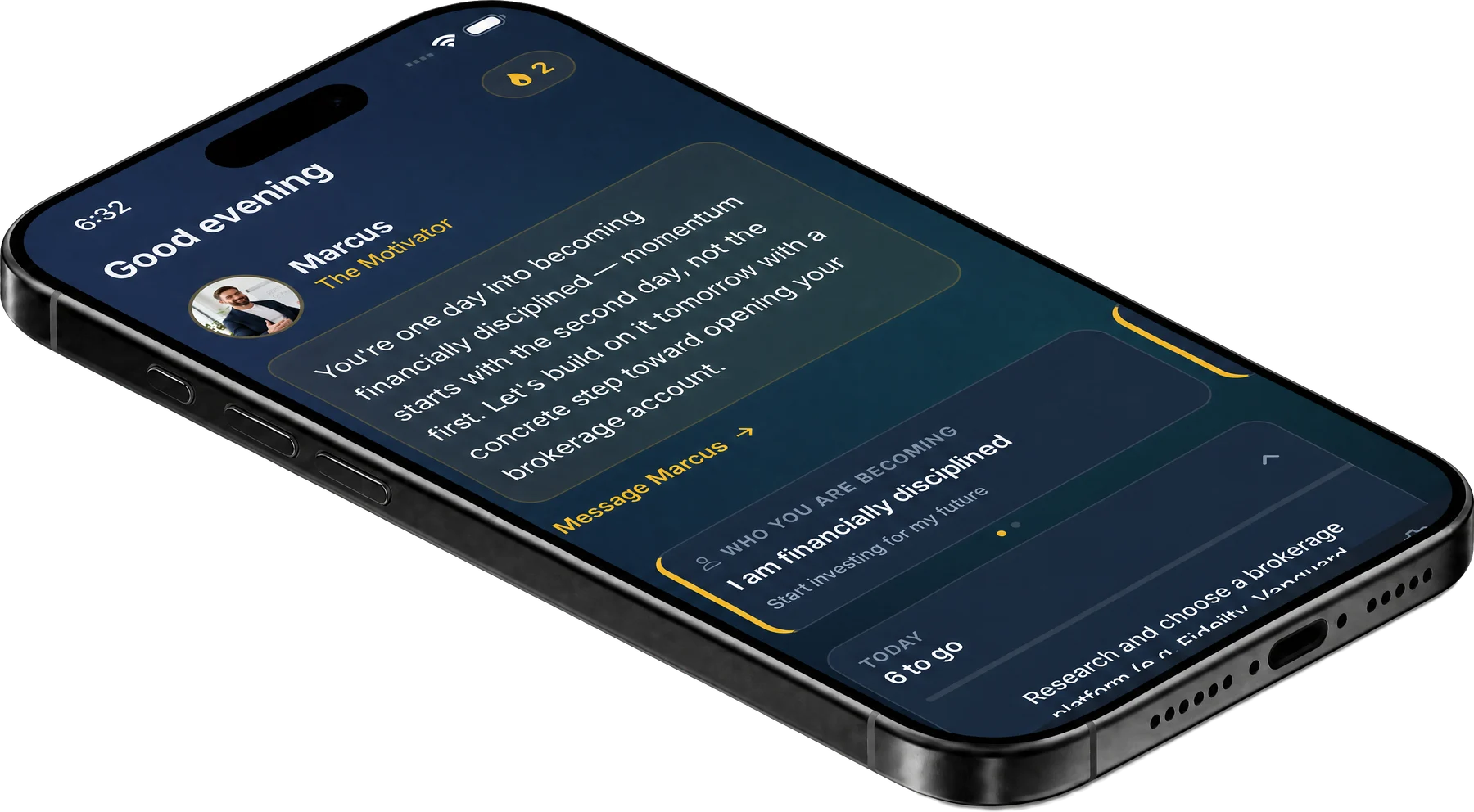
There are lower-cost ways to get some of the same structure, and each has a real trade-off. A friend who agrees to ask every Sunday covers the follow-up but not the questions. Group programs cover structure but less of your specific situation. AI coaching covers structure and regular follow-up at a fraction of a human session's cost, without the human judgment. Disclosure: we build one, so weigh this accordingly. In Odyssey the coach works through the goal with you, breaks it into milestones and checks in on a rhythm you set. Whether an AI coach is worth it sets out the honest case for and against.
Is career coaching worth it, in five lines
- Name your problem first: direction, follow-through or tactics
- Coaching is strongest when you know the direction and nothing has moved
- For direction, it helps only if you do the work between sessions
- For tactics alone, a narrower one-off service is usually better value
- Test with one session and a four-week goal before committing to more
Common questions
Is career coaching worth the money?
It can be, when it matches the problem. Career coaching tends to be most valuable for people who know roughly what change they want and have not acted on it, because structure and regular follow-up are what is missing. It is weaker value for purely tactical needs like a resume rewrite, which are often available more cheaply as standalone services.
What does a career coach actually do?
A career coach helps you clarify what you want from work, turns a vague intention into concrete steps, and meets with you regularly to review progress and work through obstacles. Some also offer tactical help with resumes, interviews and negotiation. A coach does not find you a job or decide your career for you.
Can a career coach help if I do not know what I want to do?
Yes, if you treat it as a process rather than an answer. A coach can help you narrow options through structured questions and small experiments, such as conversations with people in fields you are considering. The progress depends on doing that work between sessions; a coach cannot identify the right career for you from conversations alone.
How do I know if a career coach is any good?
Look for a coach who asks more than they talk, agrees a clear goal for the first few weeks and is happy to start with a single session. Be wary of anyone who promises a job or a salary increase, or who pushes a long package before you have worked together at all.
Are there alternatives to hiring a career coach?
Yes. A mentor in your target field can supply knowledge a coach may not have. Professional associations and alumni networks often offer free resume and interview help. A friend can provide weekly follow-up, and AI coaching apps offer structure and regular check-ins at lower cost. Each covers part of what a coach does, with different trade-offs.
The takeaway
Career coaching is worth it when it fits the problem. If you know the direction and nothing has moved, it supplies exactly what is missing. If you need direction, it helps only alongside your own legwork. If you need a better resume, a narrower service is usually the smarter buy. Work out which problem you have before deciding, and test with one bounded trial before committing to more.
One thing to do today. Write one sentence describing the career change you keep thinking about, then label it direction, follow-through or tactics. Under it, write the single step that would move it this week, and put that step in your calendar with a day and time.