Monthly goals are popular for good reasons. A year is too long to feel, a week is too short to move anything substantial, and a month sits nicely in between. The start of a month feels like a small fresh start, and there is a satisfying rhythm to setting goals on the first and checking them on the thirty-first.
The common way of doing it, though, has a quiet flaw. Each month gets a fresh list: read two books, go to the gym twelve times, clear out the garage, start learning Spanish. Each list is reasonable. Taken together, twelve of them rarely add up to anything, because nothing connects one month to the next. The year ends with a lot of starting and not much finished.
The fix is to treat a monthly goal as a milestone of something bigger. One goal a month, each one a step in a larger goal you actually care about.
This page covers why monthly goals work better as milestones, how to set one, a fifteen-minute monthly reset, examples across areas of life, and what to do when a month goes wrong.
A monthly goal should be a step in something bigger
Twelve unrelated monthly lists produce twelve months of starting. Twelve milestones of one goal produce something finished.
Most goals worth having take longer than a month: a first draft, a career change, a new skill, a project at home. A month is not enough to finish them, but it is the right size for one clear stage. That is what a milestone is: a point along the way that you could check.
Setting monthly goals as milestones changes the experience of the year:
- Each month builds on the last. January's goal makes February's possible, so progress accumulates instead of resetting.
- The big goal stays in view. The monthly question becomes "what is the next stage of the thing that matters?" rather than "what shall I try this month?"
- Finishing becomes likely. Four or five well-chosen milestones are often all a substantial personal goal needs. Why a short plan beats a long list explains why four or five is usually enough.
This does not mean every monthly goal must serve one big goal forever. It means each month's goal should belong to something, so that it adds up.
Set one goal a month, and make it checkable
A month holds about four working weeks. Most people with a job can move one meaningful thing in that time, so set one, and write it so you could check it on the last day.
Two rules make a monthly goal work:
- One, not five. Several monthly goals compete for the same evenings, and the busiest week of the month ends all of them. One goal gets the protected time.
- Checkable on the last day. Write it so that on the thirty-first, the answer is yes or no. "Work on the novel" fails this test. "Chapters three and four drafted, roughly 8,000 words" passes it.
If a month's goal does not feel big enough, that is usually a good sign. It is easier to finish a modest goal and feel the momentum than to miss an ambitious one and lose a month. SMART goals for self-improvement covers rewriting a vague goal until it can be checked.
Run a fifteen-minute monthly reset
At the end of each month, answer three questions in writing and set the next milestone. Fifteen minutes is enough.
The reset is what turns separate months into a sequence. Same time each month, for example the last Sunday:
- Did this month's goal happen? Yes, no or partly, said plainly.
- What got in the way, or what helped? One or two sentences. This is the most useful line, because it tells you how to plan the next month.
- What is the next milestone? The next stage of the larger goal, written to be checkable at the end of the coming month, with the first step in the calendar for the first week.
A weekly check keeps the month on track between resets, and the questions are almost identical. Three weekly review questions covers the weekly version, and many people find the two together are all the planning they need.
Worth knowing: if you do not yet have a bigger goal to break into monthly milestones, start there. How to make a 5 year plan and goal setting questions cover choosing one.
Monthly goal examples, as milestones
The same monthly goal can be a standalone wish or a step in something real. These examples show the second kind.
- Writing a book. Month one: 300 words in three sessions a week, about 4,000 words in all. Month two: 8,000 more. Month three: first draft of the opening third. How to start writing a book covers the rest.
- A career change. Month one: three conversations with people in the target field. Month two: one small project or course that tests the work. Month three: two applications or a first freelance client.
- Fitness. Month one: two sessions a week, every week, at fixed times. Month two: a 5k without stopping. Month three: a 10k training plan, halfway done.
- A side business. Month one: the offer written and shown to five people. Month two: the first paying customer. Month three: three customers and a simple way to find the next ones.
- Relationships. Month one: a standing monthly dinner with close friends, with the first one held. Month two: a weekly call with a parent or sibling, four times. Month three: both still happening.
- Home. Month one: one room cleared. Month two: the second room. Month three: the project you have been postponing, quoted and scheduled.
For more goals across areas of life, personal goals examples has a longer list with first steps.
When a month goes wrong, shrink the next goal
A missed month is information, not failure. Make the next milestone smaller rather than abandoning the direction.
Some months go badly: work spikes, someone is ill, a holiday eats two weeks. The risk is not the missed month itself but what happens next. The common response is to declare the goal dead or to set an even bigger goal to catch up, and both usually end the goal.
A better response:
- Answer the reset questions honestly. What actually happened, without the story about discipline.
- Shrink the next milestone. Half the size, if necessary. The aim is a month that ends with a yes.
- Keep the direction. The bigger goal stays the same. Only the pace changes.
How to get back on track after falling off covers the restart in more detail.
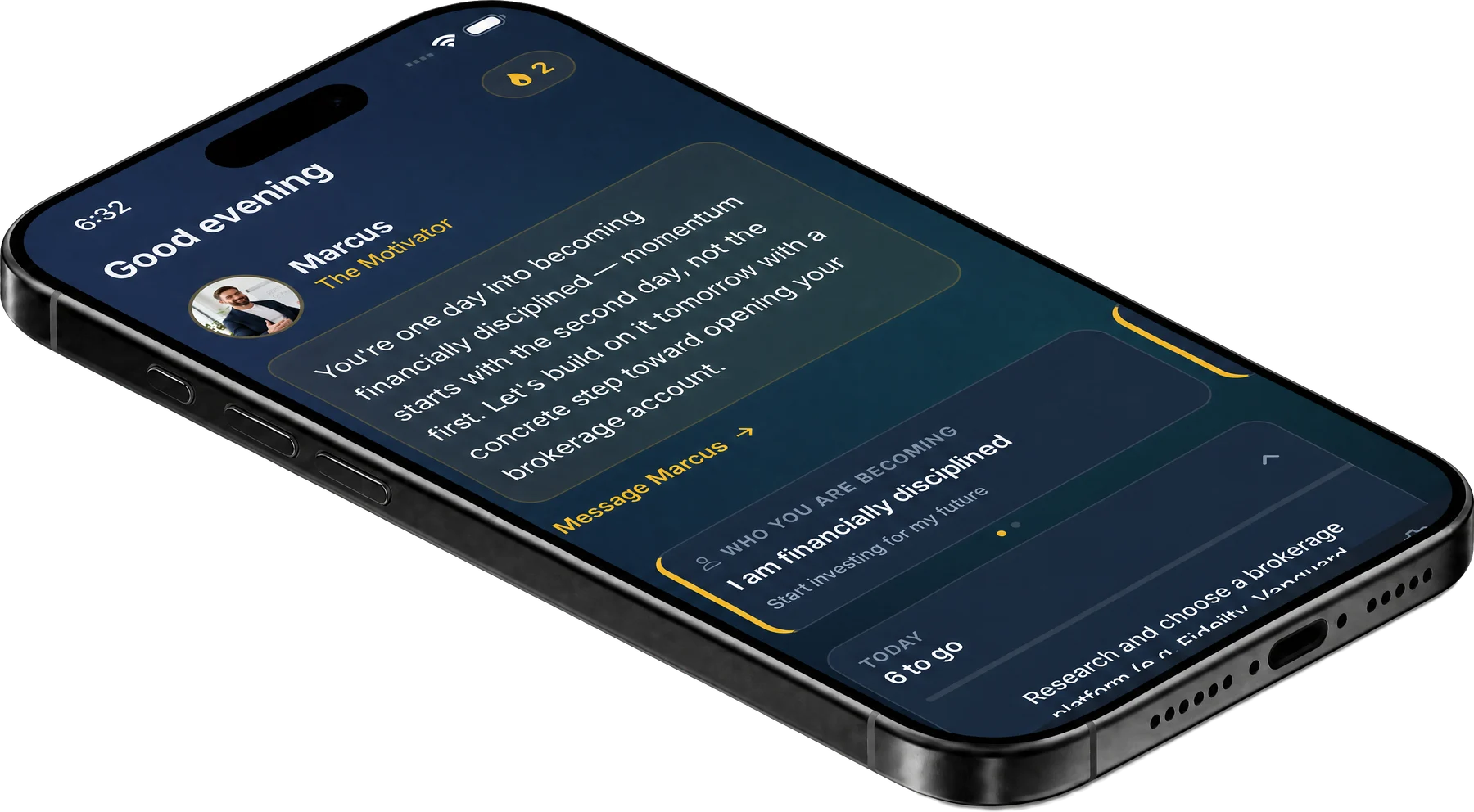
Disclosure: we build a coaching app, so weigh this accordingly. In Odyssey your coach helps break a goal into milestones, and the weekly review asks what went well, what got in the way and one focus for the coming week, with check-ins on a rhythm you set. The monthly reset itself is yours to run, and a notebook works well for it.
Monthly goals, in five lines
- Treat each monthly goal as a milestone of something bigger, so the months add up
- Set one goal a month, written so it can be checked on the last day
- Run a fifteen-minute reset at the end of each month to set the next milestone
- Pair the monthly reset with a short weekly check
- When a month goes wrong, shrink the next milestone rather than the direction
Common questions
What are good monthly goals?
Good monthly goals are specific, checkable on the last day of the month and connected to something bigger. Examples include drafting two chapters of a book, holding three conversations about a career change, running a 5k without stopping or clearing one room at home. One meaningful goal per month usually works better than a list.
How many goals should I set each month?
One is usually enough alongside a full-time job. A month has about four working weeks, and several goals compete for the same free time. If you want more, keep one main goal and treat anything else as optional.
How do I set monthly goals?
At the end of each month, spend fifteen minutes answering three questions: did this month's goal happen, what got in the way or helped, and what is the next milestone. Write the next goal so it can be checked on the last day of the month, and schedule its first step for the first week.
What is the difference between monthly goals and milestones?
A milestone is a checkable point along the way to a bigger goal. A monthly goal can be anything you aim to do in a month. Monthly goals work best when they are milestones, because each month then builds on the last instead of starting fresh.
What should I do if I miss a monthly goal?
Answer honestly what got in the way, then make next month's goal smaller rather than larger. Keep the bigger goal the same and adjust only the pace. A month that ends with a smaller yes does more for momentum than another ambitious miss.
The takeaway
Monthly goals work best when each one is a step in something bigger. Set one goal a month, make it checkable on the last day, and run a fifteen-minute reset to choose the next milestone. When a month goes wrong, shrink the next goal and keep the direction, so that twelve months add up to something finished.
One thing to do today. Write down the bigger goal you most want to move this year, then write next month's milestone for it in one sentence you could check on the last day of the month. Put a fifteen-minute reset in your calendar for the last Sunday of the month.