Search for personal goal ideas and you get lists of a hundred: skydive, learn to juggle, visit every continent, read the classics. Some of them are genuinely good, and most of them belong to somebody else. A list of a stranger's ambitions is entertaining to read and rarely changes what you do on Tuesday.
The goals that matter to a working adult tend to be quieter and older. The book you started in your twenties. The language you keep meaning to take up properly. The business idea that comes back every time work gets dull. These are not missing for lack of inspiration. They are missing a first step.
So the examples below are organized for recognition rather than adoption. Each one is the kind of goal people with a job and a full week actually carry, and each comes with a first step small enough to take in the next seven days.
This page covers personal goal examples across seven areas of life, what makes a goal worth choosing, and how to turn the one you pick into something that starts this week.
A good personal goal is one you can finish and actually want
The examples below share two traits: each has a finish line, and each is something people want for its own sake rather than to impress anyone.
Before the list, two quick tests worth running on any goal you are considering:
- Could a stranger tell when it is done? "Write a novel" has a finish line in a complete draft. "Be more creative" does not, so it never feels like progress. If a goal fails this test, rewrite it until it passes, which is exactly what SMART goals for self-improvement walks through.
- Would you still want it if nobody ever knew? Goals chosen for how they sound tend to lose to every busy week. Goals you would pursue in private tend to survive.
With those in mind, read the list for the line that makes you wince slightly because it has been on your mind for years. That is usually the one.
Creative goals are the ones most often carried for a decade
Creative goals tend to wait the longest, because beginning them means finding out the work is not yet as good as the idea.
- Write a complete first draft of a novel. First step: write 300 words of any scene, labeled in advance as a rough draft nobody will see.
- Learn to draw or paint well enough to enjoy it. First step: book one beginner class, or do twenty minutes of a structured drawing exercise.
- Record an album or an EP of your own songs. First step: record one rough voice memo of the song you most want to finish.
- Start a newsletter or a blog on a subject you know well. First step: write a list of ten post titles and draft the first one.
- Make a short film or a photo series. First step: shoot for one hour around a single theme with the camera you already own.
If a creative goal has been waiting for years, the reason is usually not talent or time. Wanting something badly makes it expensive to start, and a first step labeled as disposable is the cheapest way through.
Learning goals work best with a test you can sit
"Learn Spanish" never ends. "Hold a ten-minute conversation in Spanish" does, and it tells you what to practice.
- Hold a real conversation in a new language. First step: book one session with a tutor or a conversation partner, even before you feel ready.
- Learn an instrument well enough to play one song for someone. First step: choose the song, then find the first lesson that teaches its opening.
- Learn to cook ten dishes without a recipe. First step: pick the first dish and cook it twice this week.
- Get a qualification you have been circling. First step: find the exam date and the syllabus, and write the date in your calendar.
- Learn to code enough to build one small tool. First step: name the tool in one sentence and do the first hour of a beginner course.
Fitness goals should name an event, not an adjective
A fitness goal with a finish line, such as a distance, a skill or a date, survives far better than one built on how you want to feel.
- Run a 10k without stopping. First step: two 20-minute run-walk sessions this week, at fixed times.
- Swim a mile. First step: one session at the local pool to find out where you are starting from.
- Complete a long hike or a multi-day walk. First step: pick the route and the month, then do a two-hour walk this weekend.
- Learn a sport you never played. First step: book a beginner session in climbing, tennis, martial arts or whatever you have been curious about.
- Train twice a week for three months. First step: put the two sessions in the calendar as appointments, with the floor set at the number your busiest week could still keep.
Career goals are usually decisions waiting for information
Many career goals stall because they are framed as a leap. Framed as a short investigation, they move.
- Explore a career change properly. First step: arrange one conversation with someone already doing the work you are considering. The deciding half of a career change lays out the rest.
- Start a side business. First step: write the offer in one sentence and show it to three people who might pay for it.
- Ask for the promotion or the raise. First step: write down the case in five bullet points and book the conversation.
- Build a skill your field increasingly asks for. First step: identify one course or project that would prove it, and block the first two hours.
- Speak at an event or publish in your field. First step: write a one-paragraph pitch and send it to one organizer or editor.
Relationship and community goals need a calendar more than a resolution
Goals about people tend to slip because nothing makes them urgent. A recurring date is the whole fix.
- See close friends regularly. First step: suggest a standing monthly dinner and set the first date.
- Call a parent or a sibling every week. First step: pick the day and time, and make the first call this week.
- Volunteer for something you care about. First step: find one organization nearby and attend one session or orientation.
- Host people at home more often. First step: invite two people for a simple meal on a named date.
- Meet new people with a shared interest. First step: join one club, class or group and go twice before deciding whether it fits.
Money and home goals improve with a system rather than a sum
The goals in this area that last are usually about building a habit or a system, not hitting a number by willpower.
- Build an emergency fund. First step: open a separate savings account and set up an automatic transfer, at whatever amount is comfortable for now.
- Understand where your money goes. First step: review the last month of spending once, in a single sitting, and note three surprises.
- Clear out and organize one part of your home. First step: one hour on a single cupboard or room, with a bag ready for donations.
- Get your paperwork in order. First step: list the documents you would struggle to find in an emergency, then file the first one.
- Plan a home project you keep postponing. First step: write what done looks like and get one quote or price one material.
Experience goals are easy to postpone forever
"One day" goals need a date more than any other kind, because there is never a natural moment to begin them.
- Take the trip you keep talking about. First step: choose the month and set aside the leave, even before booking.
- See a place, an event or a performance on your list. First step: look up the next date it happens and put it in the calendar.
- Spend a weekend fully offline. First step: pick the weekend and tell the people who would need to know.
- Learn to sail, dive or fly as a one-off experience. First step: book an introductory session.
Worth knowing: most of these are the same handful of goals people carried into their thirties and have not yet begun. Feeling stuck in your 30s explains why a basically fine decade lets them wait, and how to get unstuck in life is the first week out of it.
Choose one goal to start, and park the rest on purpose
A list of seven goals in motion is one goal and six sources of guilt. Pick one to start now and write the others down with a date.
Reading a list like this tends to produce several candidates, and the natural response is to start all of them in January. That rarely works, because they compete for the same evenings and the busiest week ends all of them at once. Why a short plan beats a long list makes the case at the level of steps; it applies just as well to goals.
A better approach takes three small decisions:
- Choose by regret. Which goal would you most dislike still carrying in five years? That one goes first, however modest it looks next to the others.
- Park the rest in writing. A short list with a date to look at it again. A goal parked on paper stops making noise.
- Book the first step. A day and a time in the next seven days. If the week has no obvious slot, the reliable hours are usually not the evenings.
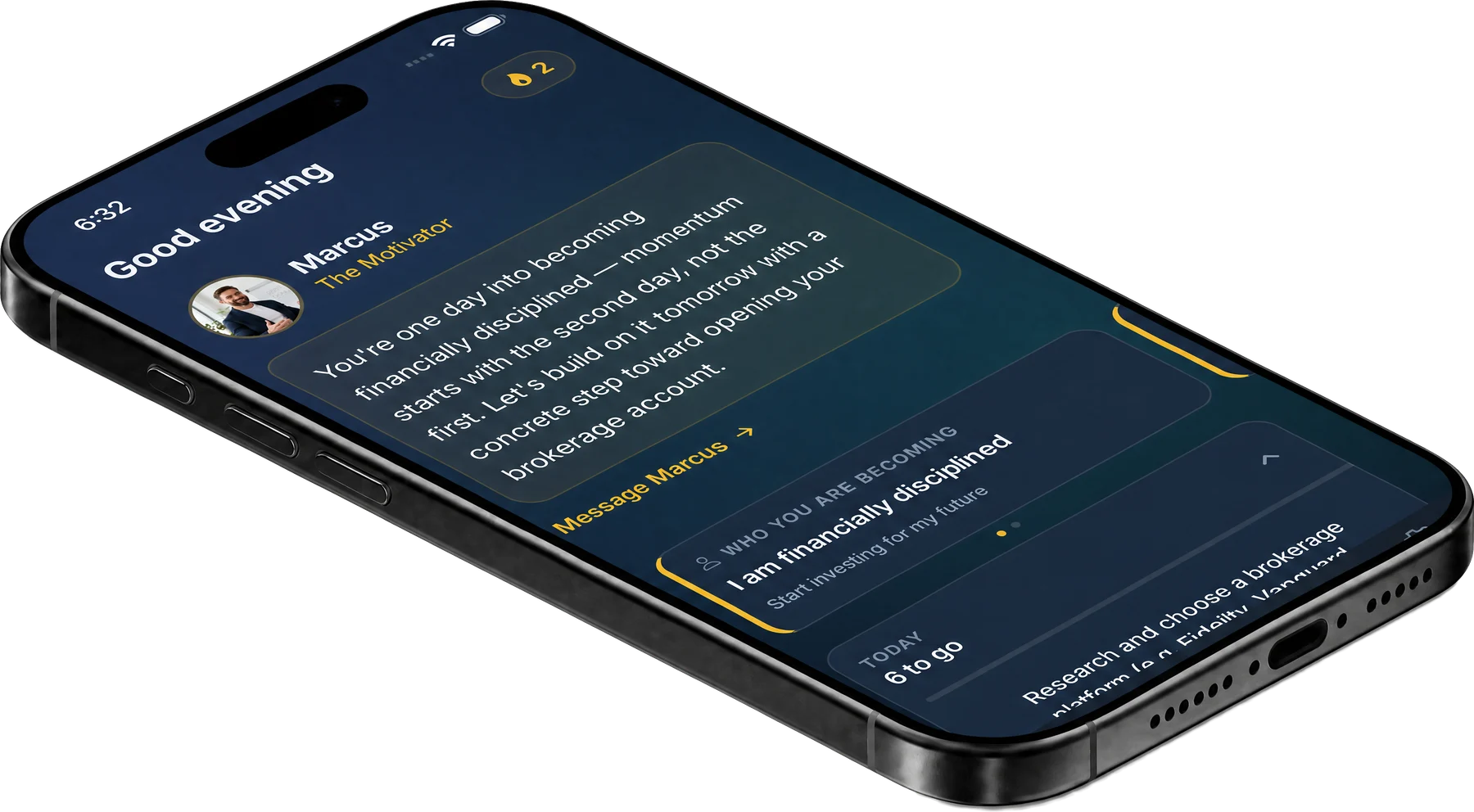
From there, the goal needs a finish line, a handful of milestones and someone or something asking how it went, which the six decisions that come before the effort covers in full. Disclosure: we build a coaching app, so weigh this accordingly. In Odyssey your coach helps break the goal into milestones when you set it, and check-ins arrive on a rhythm you choose, so the goal gets asked about without anyone having to remember. A friend who agrees to ask every Sunday does much of the same.
Personal goals examples, in five lines
- The best goal is often one you have carried for years, not one you found on a list
- Pick goals with a finish line a stranger could check
- Pair every goal with a first step you can take in the next seven days
- Choose one goal by regret and park the rest in writing with a date
- Give the chosen goal a schedule and someone who asks how it went
Common questions
What are some good personal goals?
Good personal goals are specific, finishable and genuinely wanted. Examples include writing a complete first draft of a book, holding a ten-minute conversation in a new language, running a 10k, exploring a career change through conversations with people in the field, seeing close friends on a regular monthly date, and building an emergency fund with an automatic transfer.
How do I choose which personal goal to work on?
Write down every goal you have been carrying, then ask which one you would most regret still having on the list in five years. Start that one, even if it looks less impressive than the others. Keep the rest on a written list with a date to revisit them, so they stop competing for your attention.
How many personal goals should I have at once?
One active goal is easiest to sustain alongside a full-time job, and two is a reasonable maximum. You can keep a longer list of future goals, as long as only one or two have time booked against them at any given moment.
What is the difference between a personal goal and a professional goal?
A professional goal is tied to your job or career, such as a promotion, a qualification or a career change. A personal goal is pursued for its own sake, such as a creative project, a fitness event or a language. Many goals sit in both, and the planning is the same: a finish line, a first step and a regular rhythm.
How do I actually start a personal goal?
Make the first step small enough to do this week and give it a specific day and time. Twenty minutes of the real activity, rather than research about it, is usually enough to turn the goal from an idea into something that has started.
The takeaway
A list of personal goal examples is most useful as a mirror. The line that matters is the one that names something you have wanted for years, and the work is to choose it over the others, give it a finish line and take a first step this week. The rest of the list can wait on paper.
One thing to do today. Read back through the examples and write down every line that made you pause. Circle the one you would most regret still carrying in five years, and put its first step in your calendar for a specific day this week. Ten minutes, and one long-held goal has a date.