Every year around December, the advice splits into two camps. One says set goals: specific, measurable, with deadlines. The other says goals are rigid and joyless, and that you should set intentions instead, describing how you want to live rather than what you want to achieve.
Both camps are describing something real, and both are leaving half of it out. Goals without intentions can turn into a scoreboard that you hit or miss without ever asking whether it was the right game. Intentions without goals can turn into a pleasant sentence on the fridge that has no effect on Tuesday.
The useful question is not which one to choose. It is what each one is for, and how to make them work together so that the year starts with a direction and a plan.
This page covers the difference between intentions and goals, how each one fails on its own, how to set an intention that actually shapes your week, and how to pair it with a goal.
An intention is about how; a goal is about what
An intention describes the way you want to act. A goal names a specific result you mean to finish. They answer different questions.
The distinction is easiest to see side by side:
- Intention: "Be more present with my family." Goal: "Dinner at home, phones in another room, four nights a week through March."
- Intention: "Take my creative work seriously." Goal: "A complete first draft of the novel by the end of June."
- Intention: "Look after my energy." Goal: "In bed by eleven on weeknights for the next eight weeks."
- Intention: "Stop drifting at work." Goal: "Three conversations with people in the field I am considering, by the end of February."
The intention is the quality you want to bring. The goal is the thing that will exist, or will have happened, when you are done. An intention is never finished; you act on it or you do not, day by day. A goal has a finish line, which is what makes it plannable.
Neither is the more sophisticated version of the other. They are different tools for different jobs.
Each one fails on its own, in a predictable way
Intentions drift because nothing says whether they happened. Goals harden into scorekeeping because nothing says why they matter.
An intention on its own is easy to set and easy to lose. "Be more present" feels true when you write it and has no way of telling you, three weeks later, whether you have been. With no specific action attached, it fades into the background along with every other good sentence.
A goal on its own has the opposite problem. It gives you a clear target and a way to measure it, and it can quietly become the only thing that counts. People hit a running goal while hating every session, or finish a project in a way that made the rest of their life worse, and only notice afterward. A goal also gives you nothing to stand on when you miss it, which is why one bad week can end the whole thing.
Put together, each covers the other's weakness. The goal gives the intention something concrete to act on, and the intention gives the goal a reason that survives a missed week. What changes when you set a goal with a coach shows how a goal gets tested before it gets trusted, which is where an intention earns its place.
How to set an intention that shapes your week
A useful intention is short, in your own words, and specific enough that you could tell at the end of a day whether you acted on it.
Most intentions fail because they are too large to notice. "Live more authentically" is hard to argue with and impossible to check. Three tests make an intention usable:
- You could notice it. At the end of a day, could you say honestly whether you acted on it? "Be present at dinner" passes. "Be a better person" does not.
- It is about behavior, not mood. "Feel calmer" is a hope. "Take the first ten minutes after work before answering any messages" is something you can do.
- It is yours. Written in words you would actually use, about something you actually care about, not borrowed from a list of popular intentions.
Keep it to one, or two at most. Five intentions are a mood board.
Worth knowing: an intention about who you are becoming, such as "I am someone who finishes what I start", works best when it is something you can back up with small pieces of evidence each week. How to reframe a limiting belief covers how to write one that is believable rather than an affirmation.
Use the intention to choose the goal
The way you want to live narrows which goal is worth the year, and then it shapes the goal's first step.
Most people set goals first and wonder about intentions later, if at all. The other order often works better, particularly at the turn of the year:
- Start with the intention. Write the one or two sentences about how you want the next year to feel and how you want to act.
- Choose the goal that serves it. Ask which of the goals you have been carrying would do most for that intention. "Take my creative work seriously" points at the novel rather than the marathon, however tempting the marathon is this month.
- Let the intention shape the method. If the intention is "look after my energy", a goal pursued at the cost of sleep is undermining itself. The intention becomes a rule about how the goal gets done.
- Write the first step. Something you could do this week, with a day and a time, that serves both.
This is also a useful way out of a long list. If you have six possible goals for the year, the intention is often what tells you which one goes first. Personal goal examples has a longer list grouped by area if you need help naming the candidates, and new year goal setting covers choosing one goal with a first-quarter finish line.
Check both once a week
Two questions are enough: did the goal move, and did the way you worked on it match the intention?
A weekly check keeps both alive without much effort. Ten minutes, the same day each week:
- Did the goal move? What happened, specifically, and what is the one step for next week.
- Did the week match the intention? Not perfectly, but roughly. If the goal moved and the intention did not, the method needs adjusting. If the intention held and the goal stalled, the next step may be too large.
The first question is the one most people already ask, and three weekly review questions covers it in detail. Adding the second takes a minute and catches the moment a goal starts costing more than it is worth.
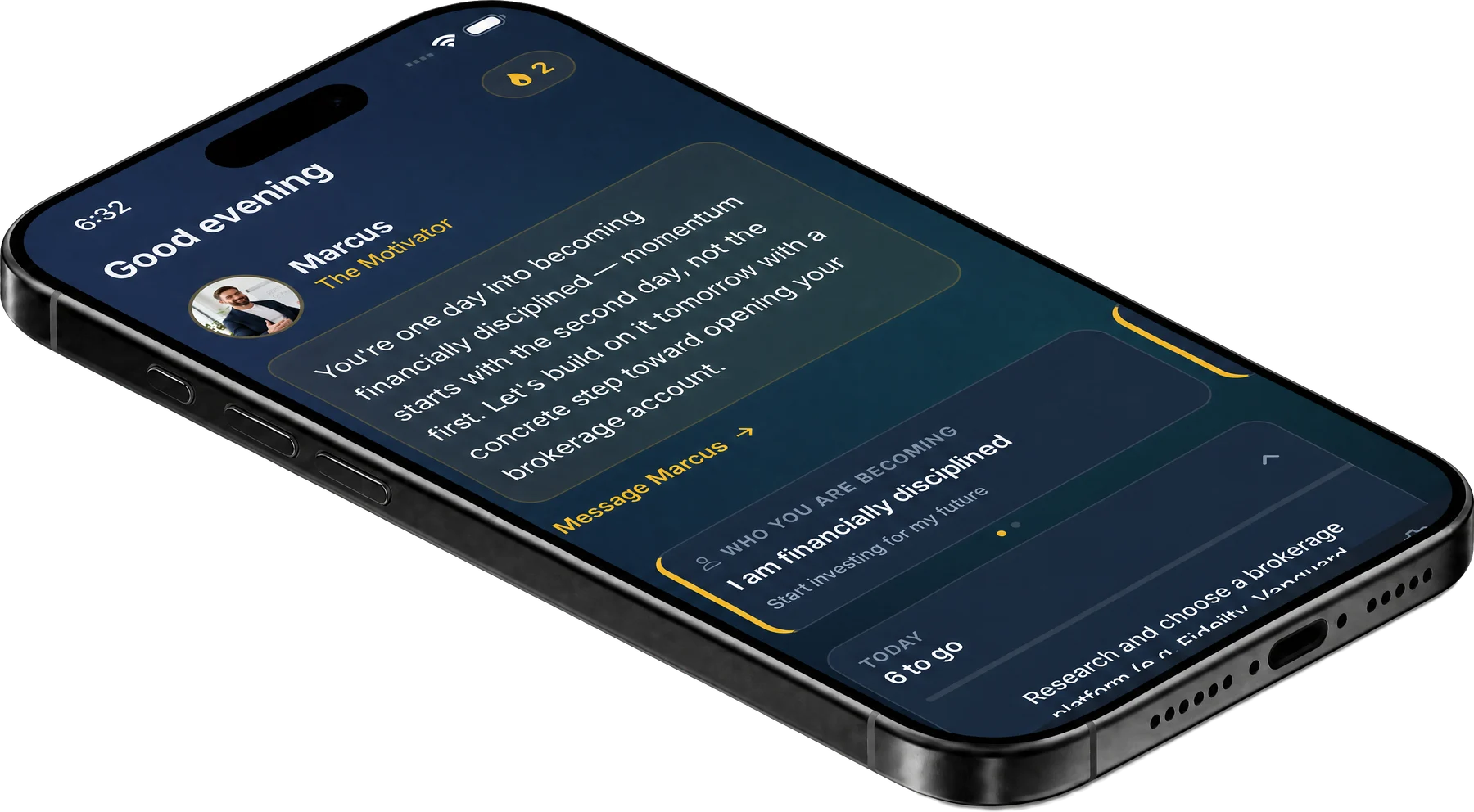
Disclosure: we build a coaching app, so weigh this accordingly. In Odyssey your coach helps break the goal into milestones, check-ins arrive on a rhythm you set, and the weekly review asks you three questions, what went well, what got in the way and one focus for the coming week, with your coach reading the week back. The second question is a natural place to ask whether the week matched the intention. A sentence on the first page of a notebook, read each Sunday, works too.
Intentions vs goals, in five lines
- An intention is how you want to act; a goal is what you mean to finish
- Intentions drift without a goal; goals harden without an intention
- A useful intention is specific enough to notice at the end of a day
- Start with the intention, then choose the goal that serves it
- Each week, ask whether the goal moved and whether the week matched the intention
Common questions
What is the difference between an intention and a goal?
An intention describes how you want to act or live, such as being more present with your family. A goal is a specific result with a finish line, such as having dinner at home four nights a week through March. Intentions are ongoing and never finished; goals can be completed and planned.
Are intentions better than goals?
Neither is better; they do different jobs. Intentions give direction and a reason that survives setbacks, while goals give a concrete target you can plan and measure. Most people do best with one intention and one goal that serves it, rather than choosing between them.
How do you set an intention?
Write one short sentence, in your own words, about how you want to act. Make it specific enough that at the end of a day you could say honestly whether you acted on it, and focus on behavior rather than mood. Keep to one or two intentions at a time.
Should I set intentions or goals for the new year?
Both, in that order. Start with one intention for how you want the year to feel, then choose the single goal that would do most for it, give it a finish line in the first three months, and schedule the first step. Check both briefly each week.
What are some examples of intentions?
Examples include being present at dinner, taking creative work seriously, looking after energy, speaking up in meetings and protecting time with close friends. Each works best paired with a specific goal, such as a weekly dinner, a draft by a date or a set bedtime.
The takeaway
Intentions and goals are not rival philosophies. An intention says how you want to live; a goal says what you mean to finish. Set one intention that you could notice at the end of a day, use it to choose the goal worth the year, and check both for ten minutes each week.
One thing to do today. Write one sentence that starts "This year I want to" and describes how you want to act, not what you want to achieve. Under it, write the one goal you have been carrying that would do most for that sentence, and the first step you could take before the end of next week.