"Read more" turns up on almost every list of goals adults keep. It sounds easy, compared with running a marathon or starting a business. There are books on the shelf already, and nobody needs to be taught how to read. And yet for many people with a full-time job, the reading pile grows, the phone wins most evenings, and a year passes with three or four books finished, mostly on holiday.
The usual advice is a list of tips: carry a book, read before bed, try audiobooks. All useful, and most people have tried several of them. The tips are not the problem. The problem is that "read more" is being treated as a vague wish rather than as a goal, so nothing gives it a shape, a time or a way to tell whether it is working.
This page treats it as a goal. It covers how to set a reading goal with a finish line, how to find the time, how to make reading the easy option, a page floor that survives busy weeks, when to quit a book, and how to keep it going past February.
Give "read more" a finish line
A reading goal you can check is easier to keep than a wish to read more. Pick a number that fits your actual weeks.
"Read more" has no finish line, so it never feels like progress. Replace it with something checkable:
- A number of books for the year. Twelve, one a month, is a common starting point for someone who currently reads three or four. More if your weeks allow it; fewer if they do not.
- A monthly milestone. One book finished by the end of each month, which turns a year-long goal into twelve small ones. Monthly goals covers setting goals this way.
- A specific list, if you prefer. "The five books on the shelf I bought and never opened" is a satisfying goal with a clear end.
Choose a number you could hit in an ordinary year, not your best year. A goal of twelve that you reach builds the habit; a goal of fifty that you abandon in March does not. Personal goals examples has more goals of this shape across other areas of life.
Give reading a slot, not spare time
Spare time goes to whatever is easiest. A fixed twenty minutes each day goes to the book.
Most people who want to read more are waiting for spare time to appear, and it rarely does. The evenings fill with messages, the phone and tiredness. Reading needs the same treatment as any other goal: a time that belongs to it.
Some slots that tend to work for people with a job:
- The first twenty minutes in bed. Phone charging in another room, book on the bedside table.
- The commute. If you take a train or bus, this is the single largest block of reading time most people have.
- Lunch. Twenty minutes away from the desk with a book.
- Early morning. Before anyone else is up, with coffee.
Pick one and keep it fixed. Finding time when you have a full-time job covers where reliable time tends to be, and the answer applies to reading as much as to any other goal.
Make reading the easy option
Friction decides more reading than willpower does. Keep the next book within reach and the phone a little further away.
In the moment, people read whatever is easiest to pick up, and for most of us that is the phone. A few small changes shift the balance:
- Keep the current book where you spend your time. On the bedside table, in the bag, on the coffee table. If it takes a trip to the shelf, it loses.
- Have the next book ready. A gap between books is where reading habits often stall. Choose the next one before you finish the current one.
- Use more than one format. A physical book at home, an ebook on the phone for queues, an audiobook for the commute or the gym. All of them count.
- Put the phone somewhere else at reading time. Charging in another room during your reading slot removes the most common interruption.
Set a page floor
Ten pages a day is small enough for a busy week and adds up to a book every few weeks.
A floor is the smallest amount that counts, decided in advance. For reading, ten pages is a good one. It takes ten to fifteen minutes, and it is small enough to keep on a tired evening. On good days you often read much more without trying; on bad days, ten pages keeps the habit going.
Ten pages a day is about three hundred pages a month, which is roughly one average book. That simple arithmetic is often what makes a goal of twelve books feel achievable rather than ambitious.
Worth knowing: if you track anything, track the days you hit the floor, not the pages. The days are what build the habit; the pages follow.
Quit the wrong book
A book you dread opening stalls the whole goal. Switching to one you want to read is not failure; it is keeping the goal alive.
One of the most common ways a reading goal ends is a book that should have been abandoned. It sits on the bedside table, half-read and unloved, and because it is "the current book", nothing else gets read either. Weeks pass.
A simple rule helps: if you have read fifty pages and are not looking forward to the next session, put it down and start something else. You can always come back to it. Choosing books you actually want to read, rather than books you think you should, is one of the most effective things you can do for a reading goal.
Keep it going past February
Most reading goals fade a few weeks in. A short weekly check and a plan for a missed week keep them alive.
Like most goals, reading goals tend to fade after the first few weeks, once the new-year energy is gone. Why goals die in week three explains the pattern. Two habits help:
- A one-minute weekly check. On Sunday: how many days did you read, what got in the way, and what is next on the list.
- A restart rule. After a missed week, go back to the floor of ten pages rather than trying to catch up.
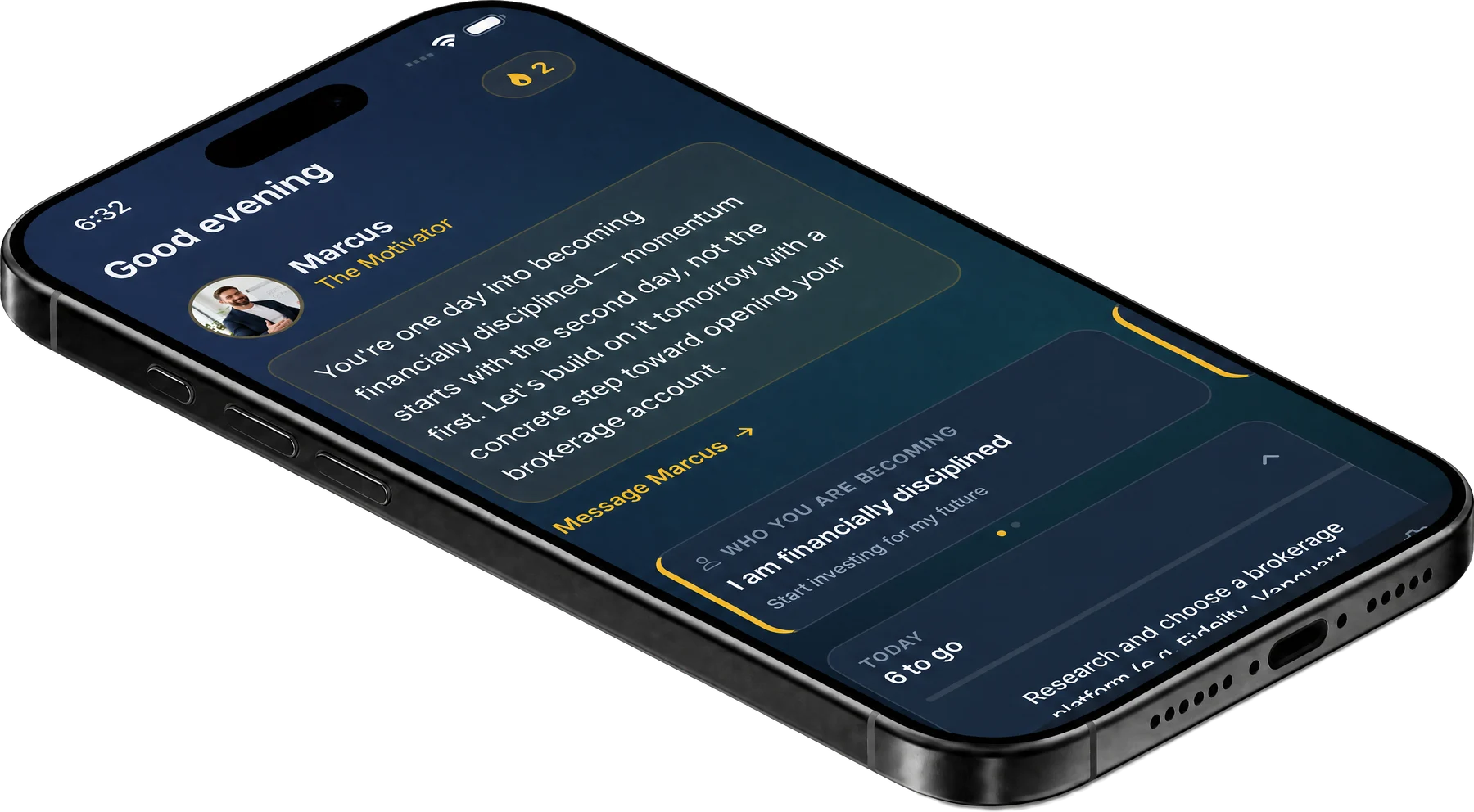
Disclosure: we build a coaching app, so weigh this accordingly. In Odyssey your coach can help set a reading goal with milestones, and check-ins arrive on a rhythm you set, which keeps the goal in view in the weeks it would otherwise fade. A friend reading the same book, or a book club with a monthly date, does much of the same.
How to read more books, in five lines
- Turn "read more" into a checkable goal, such as twelve books this year
- Give reading a fixed daily slot rather than waiting for spare time
- Keep the next book within reach and the phone a little further away
- Set a floor of ten pages so busy days still count
- Quit books you dread, and restart at the floor after a missed week
Common questions
How can I read more books with a busy schedule?
Give reading a fixed daily slot, such as the first twenty minutes in bed or the commute, and set a small minimum such as ten pages. Keep your current book where you sit at that time, and use audiobooks or ebooks for gaps in the day. Small, regular sessions add up faster than occasional long ones.
How many books should I aim to read in a year?
Choose a number you could reach in an ordinary year, not your best one. For many people who currently read a handful of books, twelve, or one a month, is a good target. It is better to reach a modest goal and raise it than to abandon an ambitious one in March.
Do audiobooks count as reading?
For a goal about reading more books, yes. Audiobooks let you get through books during commutes, exercise or chores, and many people use a mix of physical books, ebooks and audiobooks depending on where they are.
Is it okay to stop reading a book halfway?
Yes. If you are not looking forward to picking a book up again after fifty pages or so, switching to one you want to read usually does more for your reading goal than forcing yourself to finish. You can always return to it later.
How do I stop reaching for my phone instead of a book?
Put the phone in another room during your reading slot and keep the book somewhere you see it. Reading tends to lose to whatever is easiest to pick up, so small changes to where things are make a large difference.
The takeaway
Reading more is a goal like any other. Give it a finish line, a fixed daily slot and a ten-page floor, keep the next book within reach, and quit books you dread. Check it briefly each week, and after a missed week, go back to ten pages rather than trying to catch up.
One thing to do today. Choose the next book you want to read and put it where you sit tonight. Decide on a fixed twenty-minute slot for reading, and write down a number of books for the next twelve months that an ordinary year could actually hold.