The question usually gets typed mid-slide. The task is circling, three other tabs are open, and some part of you is hoping the answer is a trick that works in the next ten minutes.
So here is the honest answer up front: you do not avoid procrastination in the moment. The moment is rigged. At the point of starting, the discomfort is immediate and the payoff is weeks away, and every argument you can make on the spot loses to a relief that is available right now.
You avoid procrastination the evening before, when the task is still an idea instead of a demand. What follows is that version: five moves, all made before the moment arrives, and one honest section on what to do when it already has.
The moment is rigged, so stop fighting in it
At the point of starting, escape always pays first, and arguments do not change the payout.
Procrastination is not a reasoning failure. In the moment, avoiding the task delivers relief instantly, and the task itself pays off somewhere over the horizon. You can know everything about that trade and still take it, the same way knowing how dessert works does not make it smaller.
This is why in-the-moment advice underperforms. Motivation talks, focus playlists and a stern word with yourself all show up at the exact point where the odds are worst. The sharper the flinch, the truer this gets, and the flinch is sharpest on the goals you care most about.
If the pattern is years old rather than this week's problem, that is a different, deeper job: getting out of the habit of procrastination covers unwinding the loop itself. This page is about designing tomorrow so the loop never gets its opening.
Decide the night before, while nothing is at stake
Evening-you can set terms that morning-you only has to follow.
The night before, the task cannot hurt you. Nothing is due in the next hour, so you can look at tomorrow the way you would look at someone else's day and make three small decisions:
- What: one task that matters, not the whole list.
- When: the actual clock time it starts.
- How small: the first move, written as one concrete sentence.
That is the entire practice. Its effect is that tomorrow's start arrives pre-decided, and morning-you walks into an appointment instead of a negotiation. Most of what feels like laziness in the morning is actually decision-making dodged the night before.
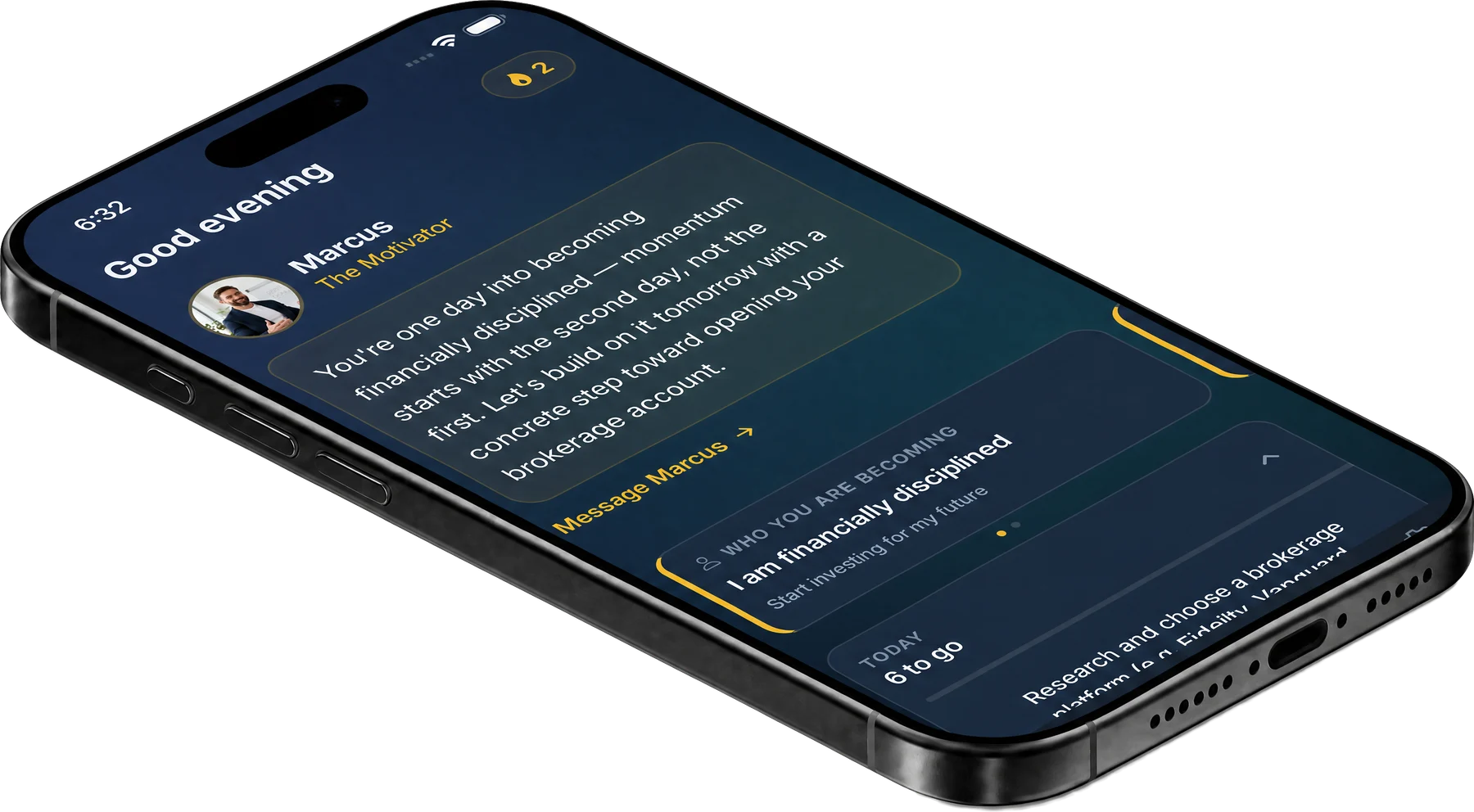
This rhythm is the one Odyssey runs on, which we build, so weigh that: the plan for tomorrow is set the evening before, and the check-in arrives on the schedule you chose, so the day opens with the decision already made. The mechanism is worth stealing even if you never install anything: a plan written the night before, by anyone, beats a plan improvised at the desk.
Give the start a time and a trigger it can ride
A to-do list names the work. Only a calendar names the start.
A list is a set of outcomes with no opinion about when anything begins, which is why a list can be complete, well-prioritized and untouched for a month. The tasks that happen are the ones with times attached.
Better still, attach the time to something that already happens every day. After the first coffee. After the school run. Straight after the last meeting, before the laptop gets to open the inbox. A start that rides an existing event does not depend on you remembering to begin, and it does not spend willpower on the transition, which is where most starts die.
Worth knowing: early progress usually runs on borrowed structure. The first weeks of anything are full of built-in prompts, and goals tend to die in the first week that has none. A trigger you own is how you keep supplying the prompts after the built-in ones run out.
Make the first move concrete enough to do half-awake
Vague plans are standing invitations to postpone.
"Work on the presentation" requires you to decide, at start time, what working on it means, and that small decision is all the opening avoidance needs. The fix is to finish the sentence the night before:
- Not "work on the deck": open the file and reread the last slide.
- Not "go for a run": put the shoes on and get out the front door.
- Not "sort out the finances": open the one account and write down the balance.
- Not "start the application": write the first line, badly, in a plain text file.
Each of these is small enough to do half-awake, and that is the point. The start is the only part of the task that needs engineering. Momentum handles more of the rest than feels plausible from the night before.
Lower the stakes of the first ten minutes
Permission to do it badly is what gets the door open.
A large part of avoidance is quality pressure arriving too early. If the first ten minutes have to produce something good, they carry the weight of the whole project, and ten minutes cannot hold that. So set the bar where it belongs: the first sitting exists to produce motion, and quality is the second sitting's job. Drafts are allowed to be bad. First workouts are allowed to be short.
If the task is big enough that even starting badly feels like standing at the foot of a wall, the problem is the shape of the plan, not your discipline. A short plan beats a long list: four or five milestones you could actually walk, with the next one small enough to start this week.
Let someone expect something
A stated intention changes the default from private to promised.
Tell one person what tomorrow's task is and when it starts. Nothing elaborate, one message. Tasks that exist only in your head can be rescheduled without witnesses, and the loop knows it. A named intention has a small social gravity that survives the morning flinch surprisingly well.
No partner available is a solvable problem rather than a missing requirement: there is a whole piece on accountability without one, and the one-way favor it recommends takes five minutes to set up.
Avoiding procrastination, the checklist
- Decide the night before: one task, a clock time, a first move
- Attach the start to an event that already happens daily
- Write the first move concrete enough to do half-awake
- Let the first ten minutes be bad on purpose
- Tell one person what tomorrow's start is
Common questions
What is the single best way to avoid procrastination?
Decide the night before. One task, an actual start time, and a first move written as one concrete sentence. Every other technique on this page is a way of protecting that decision, and none of them can replace it, because the moment itself is where the odds are worst.
How do you avoid procrastination on a big project?
Change the plan's shape before blaming your discipline. A project that only exists as a giant outcome offers nowhere to start, so break it into four or five walkable milestones and aim tomorrow's start at the smallest piece of the nearest one. Big things get built by people who only ever start small things.
Why do I still procrastinate even though I keep a to-do list?
Because a list is not a start. It names outcomes, ranks them, and says nothing about when anything begins, which leaves the actual starting to the worst possible moment. Give the top task a clock time and a concrete first move and the list starts earning its keep.
How do I stop procrastinating right now, today?
The in-the-moment version, since sometimes the slide is already happening: shrink the task to its two-minute opener, do it badly on purpose, and do not tidy anything first. Cleaning the desk is the loop wearing a productive costume. Then, tonight, set up tomorrow properly, because the durable fix lives there.
Is avoiding procrastination the same as breaking the habit?
They are different jobs on different clocks. Avoidance is day design: decide earlier, start smaller, ride existing triggers. Breaking the habit of procrastination is pattern work: changing what a years-old loop does after the flinch, and building a record that updates what you expect of yourself. Day design works immediately and the pattern work is what makes it stick.
The takeaway
The moment of starting is the worst place to fight, so stop scheduling the fight there. Decide the night before, give the start a time and a trigger, shrink the first move, and let the first ten minutes be bad.
One thing to do today. Tonight, before bed, write one line for tomorrow: the task, the clock time, and the first move in one concrete sentence. Leave it where morning-you cannot miss it.