The word habit is doing real work in that search. Not "how to stop procrastinating today". The habit of it: the version with years behind it, the one you have watched yourself repeat often enough to suspect it is simply part of you.
That suspicion is the first thing to put down. A pattern rehearsed for a decade looks like character from the inside, and it is closer to a groove. Grooves are walked out of, not argued with.
What follows: what the loop actually is, why resolving to feel differently about it fails every time, and the four moves that unwind an old pattern, in order.
The habit is a loop, not a character trait
What repeats is a four-step sequence, and the last step is the one that trains it.
The task comes up. A flinch arrives, some mix of boredom and dread that is over in a second. Something easier slides into the gap, the inbox or the phone or a chore that suddenly matters. And then relief, immediate and reliable.
That relief is the engine. The payoff for doing the real task sits weeks or months away, while the payoff for escaping it arrives instantly, and anything rewarded instantly, repeated for years, becomes automatic. There is nothing defective about a person whose loop learned this. It is what repetition does to everyone.
That is also why the starting problem is worth treating on its own terms rather than as a shortfall in you, which is how this whole cluster is framed.
The loop is also pickiest exactly where it hurts most. The flinch is sharpest on the goals you actually want, because starting is where the imagined version of the book, the business or the fitness becomes a real and flawed one. The habit is not evidence that you do not care. It usually marks the places you care most.
Worth knowing: the loop is content-agnostic. The same person who has postponed a manuscript for three years answers email within minutes. That is not a work ethic problem in one place and not the other. It is one loop, choosing whatever closes fastest.
Deciding to feel different is the move that fails
Willpower aims at the flinch, and the flinch is not up for negotiation.
The standard exit attempt is a resolution: from Monday, I am someone who just does the thing. It fails on schedule, because it targets the feeling. The flinch is the oldest part of the loop and the least movable. Monday arrives, the task comes up, the flinch shows up exactly as before, and now the loop runs with a worse mood on top, because this time it also proves the resolution wrong.
Every repetition of that cycle deepens the groove. Trying harder at the same move is not a new strategy. It is the old loop with higher stakes.
The workable target is different: leave the flinch alone and change what happens in the thirty seconds after it. You do not need to want to start. You need the next move to be so small that wanting does not come into it.
Give the loop a different ending, and make it small
The replacement move has to be too small for the dread to attach to.
Not "work on the book". The two-minute version:
- The book: open the draft and reread the last paragraph you wrote. Nothing else is required.
- The gym: put shoes on and stand outside the front door.
- The language: one exercise, on the sofa, badly.
- The business: write one sentence describing tomorrow's single step.
These look trivial, and that is the design. The flinch is a response to the size of the imagined session, so a move with no session in it slips past. What happens after the two minutes takes care of itself more often than not, and on the days it does not, the loop still ended differently, which is the only thing being trained.
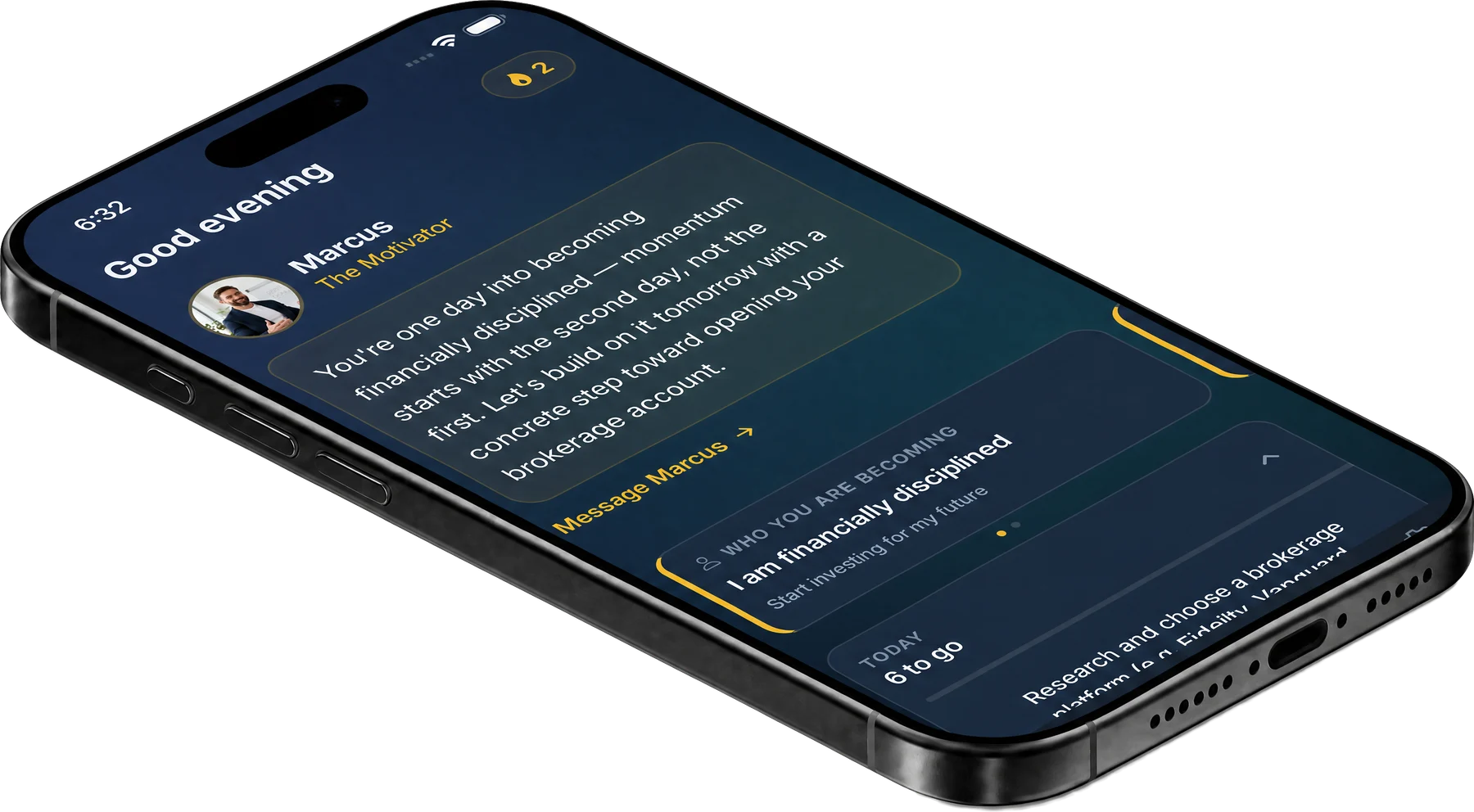
The failure mode is letting the move grow back. A start that worked gets promoted to a bigger start, the bigger start revives the flinch, and the loop is home again. This is where structure earns its keep, and it is the mechanic we built into Odyssey, which you should weigh in what we say about it: when a commitment keeps failing, the coach shrinks it rather than repeating it, because a smaller kept promise beats an identical broken one.
The habit dissolves on evidence, not insight
An old pattern's strongest argument is your own record, so build a new record where you can see it.
Understanding everything above changes nothing by itself. The loop was not built by reasoning and it does not come apart from reasoning. It comes apart when "I always put this off" stops being the best summary of the data.
So make the data visible. A mark on a calendar for every day the opening move happened. One person told, plainly, what you are doing this week. A short weekly review where you read the marks back. None of this is decoration: each repetition of a different ending is a piece of evidence, and evidence is the only thing the old summary respects.
The sentence itself is worth working on too. "I always do this" is a belief with a history, and beliefs with histories have a mechanism for being replaced, in your own words, with your own record as the argument.
Go further: the loop thrives in unstructured time, which is why it gets worse exactly when the calendar goes quiet. Why goals die in week three is the same mechanism at the scale of a single month.
A relapse is a data point, not a verdict
Old loops reassert themselves under pressure. The restart is what you design in advance.
Some week, travel or a deadline or an ordinary bad Tuesday interrupts the run, and the old groove is right there, comfortable as ever. This is not the plan failing. It is what the second month of any pattern change contains, and treating it as a verdict is itself part of the old loop, because a verdict is a reason to stop.
The move is to decide, now, what the first day back looks like: which two-minute opener, on which day, marked where. Deciding it in advance matters because the person mid-relapse is the least qualified person to design a comeback, and the person you are today is not carrying any of the sting. Getting back on track has its own short playbook, and a pre-mortem is the fifteen-minute version: name the three likeliest interruptions and write the restart for each before any of them happens.
The way out, in five lines
- The habit is a loop that ends in relief, and the relief is the trainer
- Leave the flinch alone. Change the thirty seconds after it
- Shrink the opening move until dread cannot attach to it
- Keep visible evidence of different endings. Identity follows the record
- Design the restart before the relapse, because mid-relapse is too late
Common questions
Is procrastination just laziness?
No, and the difference is checkable. Laziness is not wanting the outcome. The habit of procrastination postpones outcomes you demonstrably want, sometimes for years, while you work hard at everything else in reach. A lazy person does not feel the flinch. The flinch only fires when something is at stake.
How long does it take to get out of the habit?
Anyone who gives you a number invented it. The honest unit is repetitions, not weeks: the pattern loosens as different endings accumulate, and the pace depends on how often the loop gets the chance to end differently. What can be said is that the early repetitions are the expensive ones, and that it gets cheaper.
Why do I procrastinate most on the things I want most?
Because starting is where the imagined version meets the real one. A goal you barely care about carries no such risk, so it never triggers the flinch. There is a full piece on exactly this, and the short version is that the dread is not a warning about the goal. It is a measure of how much it matters.
Can the habit come back after it is gone?
The groove stays walkable, so yes, under enough pressure the old ending can reappear. What changes is the cost of returning. A person with a designed restart and a visible record treats a relapse as a missed day. The durable skill is not never slipping. It is restarting cheaply.
Do I need a coach to do any of this?
Need, no. A calendar, a two-minute rule and one honest friend cover most of it. What a coach adds, human or software, is the part you cannot supply yourself: someone who holds the plan, asks on a rhythm you set, and shrinks the commitment when it keeps failing instead of letting you repeat it. How to avoid procrastination day to day covers the version of this you can run entirely alone.
The takeaway
The habit was built by repetitions and it comes apart the same way: not through a better argument with yourself, but through a smaller move, repeated, recorded, and restarted without drama when it breaks.
One thing to do today. Pick the goal you have postponed longest. Write its two-minute opening move as one concrete sentence, do the move before the end of the day, and put a mark somewhere tomorrow-you cannot miss it. That mark is the first entry in the new record.