Fitness goals are among the most common goals adults set, especially in January, and among the most often abandoned. Part of the reason is how they are usually written: "get fit", "get in shape", "be healthier". These sound like goals, but none of them has a finish line, so none of them can be planned, checked or finished.
A fitness goal that lasts usually names something you mean to be able to do by a certain date: a distance, a lift, a skill, a route, a number of weeks of showing up. That shift sounds small. In practice it changes almost everything about how the goal is pursued, because a goal you can check is a goal you can plan backward from.
The examples on this page are written that way. None of them is about how you look; all of them are about what you can do.
This page covers what makes a fitness goal work, twenty examples across six kinds, how to choose one, and how to keep it going through busy weeks.
A good fitness goal names something you can do
A fitness goal works when it names an ability or an event with a date. Adjectives like "fit" or "toned" cannot be checked, so they cannot be planned.
Three tests make a fitness goal usable:
- You could check it on a date. "Swim a mile by June" passes. "Swim more" does not.
- It is about doing, not appearance. Ability goals give you something to practice every session, and the progress shows up in what you can do, which is far more motivating than a mirror.
- It fits your actual week. A goal that needs five sessions a week from someone who can manage two is a goal that ends in March.
If you have a health concern or have not exercised for a long time, check with your doctor before starting something new. The goals below assume a gentle start and a gradual build.
Fitness goals examples, in six kinds
Each example below has a way to check it and a first step you could take this week. Choose by what you would enjoy practicing, not by what sounds impressive.
Endurance goals
- Run 5k without stopping. Check: one continuous 5k, at any pace. First step: two twenty-minute run-walk sessions this week. How to start running covers the first weeks.
- Run a 10k or a half marathon. Check: the event finished. First step: choose the event and put the date in your calendar.
- Swim a mile. Check: a continuous mile in the pool. First step: one session to find out how far you can swim today.
- Cycle a long route you have been eyeing. Check: the route finished in a day. First step: a ride of a third of the distance this weekend.
Strength goals
- Do ten full push-ups in a row. Check: ten, with good form. First step: find the version you can do today, against a wall or a bench, and do three sets twice this week.
- Do one pull-up. Check: one full pull-up, unassisted. First step: two sessions of hanging and assisted pull-ups this week.
- Learn the basic lifts properly. Check: a session where a coach or a knowledgeable friend signs off your form. First step: book one introductory session at a gym.
- Carry your own luggage up the stairs without thinking about it. Check: a weekly strength session for three months. First step: put two short strength sessions in the calendar.
Skill and sport goals
- Learn a sport you never played. Check: a beginner course finished, or a first friendly match played. First step: book one taster session in climbing, tennis, martial arts or anything you have been curious about.
- Climb a grade harder than you can today. Check: one route or problem at the new grade. First step: two sessions at a climbing wall this month.
- Swim front crawl properly. Check: two lengths of front crawl without stopping. First step: book an adult lesson.
- Join a team. Check: a full season played. First step: find one local team or league that takes beginners and email them.
Consistency goals
- Train twice a week for three months. Check: twenty-four sessions ticked off. First step: put the two weekly sessions in the calendar as appointments.
- Walk every day for a month. Check: thirty walks of at least twenty minutes. First step: choose the time of day and the first route.
- Never miss a Monday. Check: one session every Monday for twelve weeks, even a short one. First step: decide what the Monday session is.
Mobility goals
- Touch your toes comfortably. Check: palms or fingertips to the floor with straight legs, without forcing it. First step: ten minutes of stretching three evenings this week.
- Get up from the floor without using your hands. Check: it, done smoothly. First step: practice a few times a day while the kettle boils.
- Do a twenty-minute stretching or yoga session three times a week. Check: thirty-six sessions over three months. First step: pick one beginner session and do it tonight.
Outdoor goals
- Complete a multi-day walk. Check: the route finished. First step: pick the route and the month, then walk for two hours this weekend.
- Climb a hill or mountain you have always meant to. Check: the summit. First step: choose it and pick a date at least two months away.
Worth knowing: for goals across the rest of life, not just fitness, see personal goals examples, which has a first step beside each.
Choose one fitness goal, two at most
One fitness goal pursued properly beats four pursued halfway. Choose the one you would enjoy practicing, and leave the rest for after it is done.
January lists often hold several fitness goals at once: run a race, get stronger, start yoga, walk more. Each one needs regular sessions, and an ordinary week rarely has room for all of them. What usually happens is a strong start on everything and then a quiet stop on everything, all in the same busy week.
A better approach:
- Choose by enjoyment, not virtue. The goal you would look forward to practicing is the one you are most likely to keep. If you hate running, a running goal is a poor first choice however sensible it sounds.
- Pair, do not pile. If you want two, make them different kinds that use different days, such as a weekend endurance goal and a short weekday mobility goal.
- Park the rest. Write them down with a note to revisit them once the first goal is finished.
Short term goals examples and long term goals examples show how a first fitness goal can become the first stage of something bigger.
Set a floor for busy weeks
A floor is the smallest session that still counts. It keeps the goal alive in the weeks that would otherwise end it.
Most fitness goals do not end with a decision to stop. They end with a busy week, then another, and then a quiet assumption that the goal is on hold. A floor counters that:
- Decide it in advance. For example: ten minutes of the activity, or a twenty-minute walk if the planned session is impossible.
- Make it small enough for your worst week. If the floor is still hard on a bad week, it is too big.
- Count it. A floor session is a session. The habit is what matters most in the early months, and the habit is built by showing up, not by every session being a good one.
How to stay consistent with goals covers the floor idea in more depth, and finding time when you have a full-time job covers where the sessions can go.
Keep it going past February
Fitness goals tend to fade a few weeks in. A weekly check, a restart rule and someone who asks keep them going.
A few habits make the difference:
- A five-minute weekly check. How many sessions happened, what got in the way, and when next week's sessions are. Three weekly review questions gives a simple format.
- A restart rule. After a missed week, repeat the last stage instead of pushing to catch up. How to get back on track after falling off covers this for any goal.
- Someone who asks. A training partner, a class with a regular time, or a friend who checks in every Sunday.
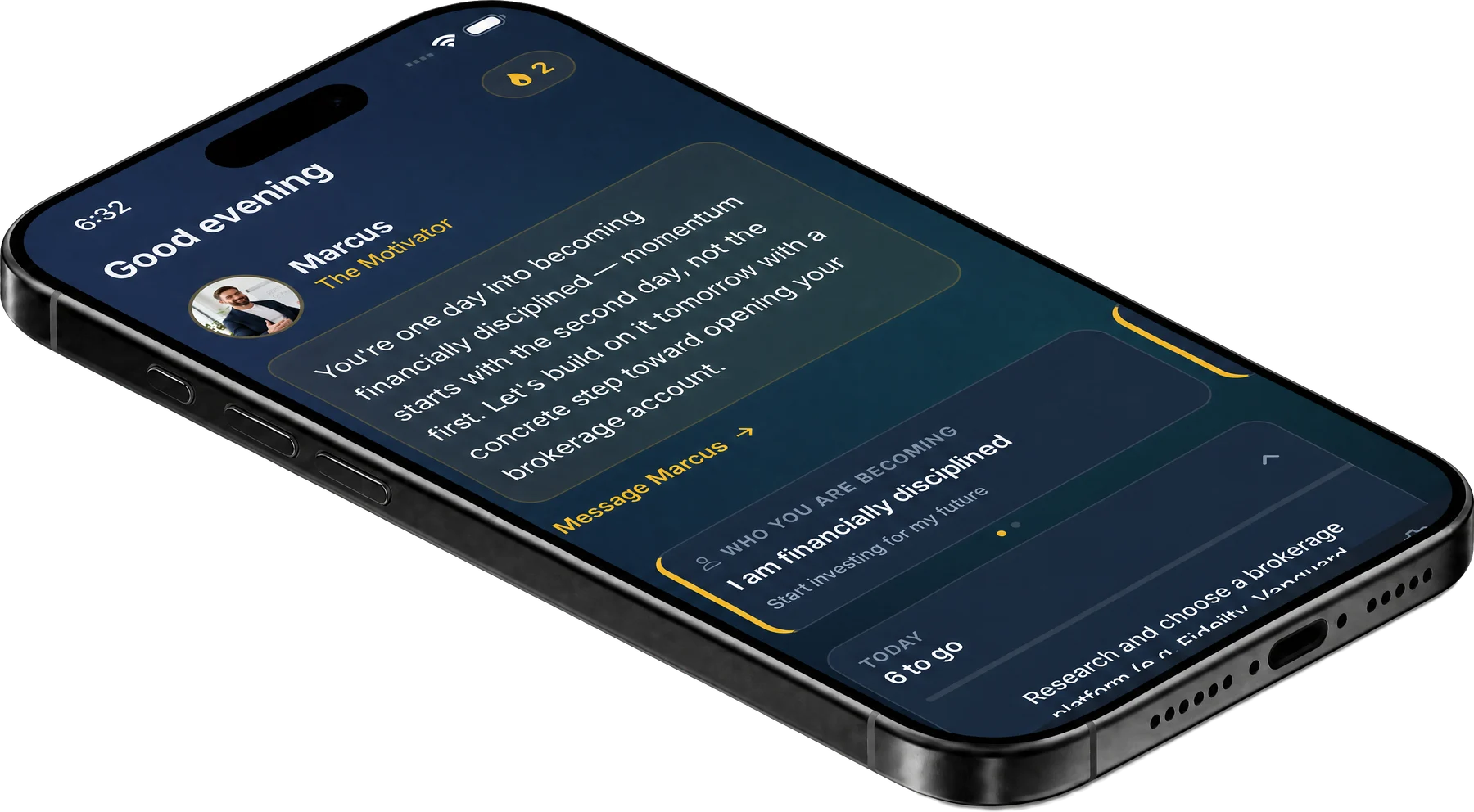
Disclosure: we build a coaching app, so weigh this accordingly. In Odyssey your coach helps break a fitness goal into milestones, and check-ins arrive on a rhythm you set, which keeps the goal in view in the weeks it would otherwise fade. A training partner who expects you on Saturday does much of the same job.
Fitness goals examples, in five lines
- Name something you can do by a date, not an adjective or an appearance
- Choose from six kinds: endurance, strength, skill, consistency, mobility, outdoors
- Pick one goal you would enjoy practicing, two at most, and park the rest
- Set a floor small enough for your worst week, and count it
- Check weekly, restart after gaps, and give the goal someone who asks
Common questions
What are some good fitness goals examples?
Good fitness goals name something you can do by a date: run 5k without stopping, swim a mile, do ten push-ups in a row, do one pull-up, learn a new sport, train twice a week for three months, or complete a multi-day walk. Each can be checked, so each can be planned backward.
What is a realistic fitness goal for a beginner?
A consistency goal is often the most realistic start, such as training twice a week for three months or walking every day for a month. Ability goals like a continuous 5k or ten push-ups are also realistic for many beginners over roughly two to three months, with a gentle start and a gradual build.
How do I set fitness goals?
Choose something you would enjoy practicing, write it as an ability or event with a date, and work back to a weekly plan you can keep alongside work. Set a floor for busy weeks, put the sessions in your calendar, and check progress briefly each week.
How long does it take to reach a fitness goal?
It depends on the goal and where you start. Consistency goals usually run for one to three months by design, and many ability goals, such as a first 5k or ten push-ups, take a few months of steady practice. Choose a date that leaves room for a gentle start and a missed week or two.
How many fitness goals should I have?
One is usually best, two at most if they use different days and different kinds of effort. Several fitness goals at once tend to compete for the same time, and a single busy week can end all of them.
The takeaway
The fitness goals that last name something you can do by a date, not something you want to look like. Choose one you would enjoy practicing, give it a finish line and a floor for busy weeks, and check it briefly each week. After a missed week, repeat the last stage and carry on.
One thing to do today. Choose one goal from this page and write it as a sentence with a date, such as "run 5k without stopping by the end of March". Then put the first two sessions in your calendar for this week, and decide what your floor is for the weeks that go wrong.